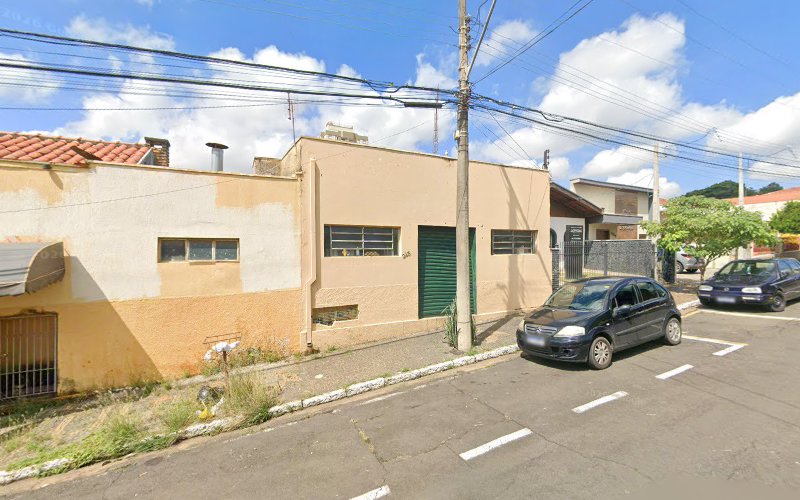
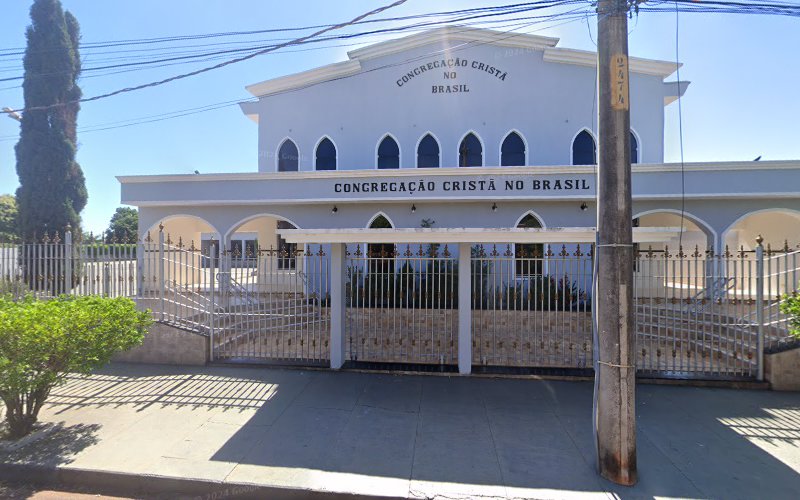
christian church
Christian Congregation in Brazil | Center - Panorama Central (Congregação Cristã no Brasil | Centro - Central de Panorama)
About this place
Discover Christian Congregation in Brazil | Center - Panorama Central (Congregação Cristã no Brasil | Centro - Central de Panorama)
Christian Congregation in Brazil
The Christian Congregation in Brazil (Congregação Cristã no Brasil) stands as a significant evangelical denomination with deep roots in the nation's religious landscape. Established in 1910 by Italian-American missionary Luigi Francescon, the church has undergone remarkable growth and transformation, both within Brazil and internationally.
Historical Background
The origins of the Christian Congregation in Brazil trace back to the early 20th century, during a period of religious revival among Italian immigrants in the United States. Luigi Francescon, a key figure in the Italian Pentecostal movement, embarked on missionary journeys to Brazil, aiming to spread Pentecostal beliefs among the Italian diaspora and the broader Brazilian population. His efforts culminated in the establishment of the first congregations in Santo Antônio da Platina, Paraná, and São Paulo, marking the inception of the denomination in Brazil. (pt.wikipedia.org)
Growth and Expansion
Over the decades, the Christian Congregation in Brazil has experienced exponential growth. By 2016, the denomination boasted approximately 2.8 million members and over 20,000 temples nationwide. This expansion reflects the church's deepening influence and its resonance with a diverse demographic across the country. Internationally, the church's reach extends to 85 countries, underscoring its global missionary endeavors. (pt.wikipedia.org)
Worship Practices and Musical Traditions
Central to the church's worship services is the use of large instrumental orchestras that accompany congregational hymn singing. These ensembles are distinctive for their emphasis on acoustic wind and brass instruments, including flutes, clarinets, trumpets, trombones, and multiple saxophones. The incorporation of extended-range instruments, such as the contrabass and subcontrabass saxophones, adds a unique depth to the musical experience. This rich musical tradition not only enhances the worship atmosphere but also serves as a significant component of the church’s liturgical life and collective identity. (en.wikipedia.org)
Theological Foundations and Beliefs
The Christian Congregation in Brazil adheres to a theology rooted in the Pentecostal tradition, emphasizing the "Finished Work" doctrine. This belief centers on the sufficiency of Christ's sacrifice and the importance of personal salvation through faith. The church's governance is congregationalist, allowing for autonomy and self-governance within each congregation. While it maintains full communion with the Assemblies of God in Italy, the Canadian Assemblies of God, and the International Fellowship of Christian Assemblies, the church operates independently, reflecting its commitment to its unique identity and mission. (en.wikipedia.org)
Cultural and Social Impact
The church's growth mirrors the broader expansion of Pentecostalism in Brazil, which has become a significant religious movement in the country. In 2010, the Christian Congregation in Brazil was the third-largest Protestant denomination in Brazil by membership, with 5.4% of the evangelical population. (valor.globo.com) This growth has had a profound impact on Brazilian society, influencing cultural norms, social values, and community dynamics.
Notable Events and Milestones
A significant milestone in the church's history was the 53rd Assembly of Elders held from March 29 to 31, 1988. During this assembly, the church addressed its position on its relationship with other evangelical movements, emphasizing its unique identity and doctrinal stance. This event underscored the church's commitment to its foundational beliefs and its dedication to maintaining doctrinal purity. (pt.wikipedia.org)
Visitor Information
For those interested in visiting a Christian Congregation in Brazil temple, services are typically open to the public. Visitors can expect a warm welcome and an opportunity to experience the church's unique worship style, characterized by its distinctive musical traditions and fervent congregational participation. Given the church's extensive presence across Brazil, with over 20,000 temples, there is likely a congregation near most major cities and towns. For specific service times and locations, it is advisable to consult the official website or contact local congregations directly. (en.wikipedia.org)
Conclusion
The Christian Congregation in Brazil represents a dynamic and influential force within the nation's religious landscape. Its rich history, distinctive worship practices, and significant cultural impact underscore its importance in both Brazilian society and the global Pentecostal movement. As it continues to grow and evolve, the church remains a testament to the enduring power of faith and community.
Location