Tourist attraction
Hotel de Charost (Hôtel de Charost)
About this place
Discover Hotel de Charost (Hôtel de Charost)
The Hôtel de Charost, located at 39 Rue du Faubourg Saint-Honoré in Paris, stands as a testament to the rich tapestry of French history and architecture. Since 1814, it has served as the official residence of the British Ambassador to France, symbolizing the enduring diplomatic relations between the United Kingdom and France. (en.wikipedia.org)
Historical Background
The construction of the hôtel began in 1720 and was completed in 1722. Commissioned by Armand de Béthune, the 2nd Duke of Charost and governor to King Louis XV, the building was designed by Antoine Mazin, the king's own architect. The property was strategically located on Rue du Faubourg Saint-Honoré, a road that, at the time, was a winding path passing through fields and market gardens leading to the village of Roule on the outskirts of Paris. (en.wikipedia.org)
In 1785, the Duke of Charost rented the hôtel to the Comte de la Marck, a wealthy landowner from the Low Countries. The Comte undertook significant enhancements to the property, completing much of the 18th-century interior décor and establishing what became known as the "English Garden." (en.wikipedia.org)
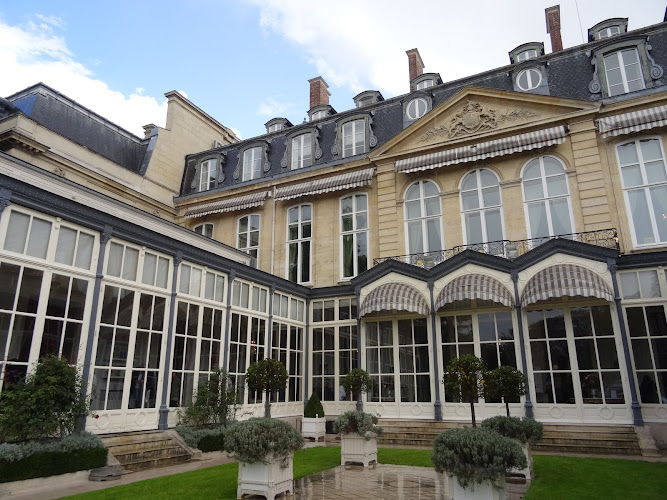
In 1803, Pauline Borghese, the sister of Napoleon Bonaparte, purchased the property. Napoleon financed a substantial portion of the 400,000 francs purchase price, with Borghese borrowing the remainder from her brother and sister. During her ownership, Borghese expanded the building by adding two large wings to the south side facing the garden. The west wing was designed to house her art collection, while the east wing was transformed into a grand state dining room. (en.wikipedia.org)
Following the fall of Napoleon, the British government sought a permanent residence for its ambassador in Paris. In 1814, the government purchased the hôtel and its contents from Borghese, excluding her art collection. The Duke of Wellington, who served as Ambassador for five months that year, entertained lavishly, purchasing new silver and Sèvres china for the residence. (en.wikipedia.org)
Architectural Features
The Hôtel de Charost is a prime example of 18th-century French classical architecture. The building is constructed with stone and features a symmetrical façade, with the main entrance leading into a central courtyard. The interior boasts elegant salons, a grand staircase, and meticulously preserved period furnishings. The addition of the two wings by Pauline Borghese introduced new architectural elements, including the expansive state dining room and the gallery designed to display her art collection. (en.wikipedia.org)
Cultural Significance
The hôtel has played a significant role in the cultural and political history of France. As the residence of the British Ambassador, it has been the site of numerous diplomatic events and gatherings, fostering Franco-British relations. The property's evolution from an aristocratic home to a diplomatic mission reflects the changing tides of European politics and the enduring importance of cultural exchange. (en.wikipedia.org)
Notable Events
Throughout its history, the Hôtel de Charost has been the backdrop for various notable events. During the tenure of the Duke of Wellington as Ambassador in 1814, the residence hosted lavish entertainments, including the acquisition of new silver and Sèvres china, underscoring the importance of hospitality in diplomatic relations. (en.wikipedia.org)
Visitor Information
As the official residence of the British Ambassador to France, the Hôtel de Charost is not open to the public. However, its location on Rue du Faubourg Saint-Honoré places it in proximity to several notable Parisian landmarks, including the Élysée Palace, the official residence of the President of France. Visitors to the area can appreciate the architectural beauty of the hôtel from the exterior and explore the surrounding neighborhood, which is rich in history and culture.
Conclusion
The Hôtel de Charost stands as a monument to the rich history and enduring diplomatic ties between the United Kingdom and France. Its architectural elegance and storied past continue to captivate those interested in the cultural heritage of Paris.
Location