Cancer treatment center
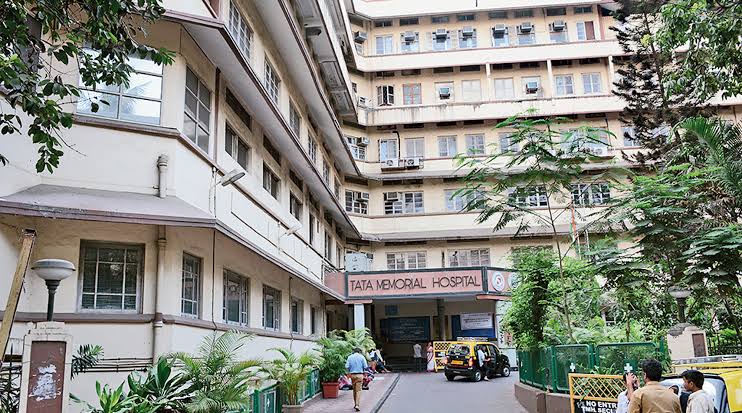
Tata Memorial Hospital
About this place
Discover Tata Memorial Hospital
Tata Memorial Hospital
Established on February 28, 1941, Tata Memorial Hospital (TMH) in Mumbai stands as India's oldest and largest cancer treatment and research center. Operating under the Department of Atomic Energy (DAE), it has grown into a national network of cancer hospitals, delivering advanced, evidence-based care across the country. TMH registers over 120,000 new cancer patients annually, with approximately 60% receiving free or highly subsidized treatments, reflecting its commitment to accessible healthcare. (en.wikipedia.org)
Historical Background
The inception of TMH traces back to the personal loss of Sir Dorabji Tata, the chairman of Tata Sons, who lost his wife, Meherbai Tata, to leukemia in 1932. This tragedy spurred him to establish a facility in India akin to those abroad where his wife was treated. After Sir Dorabji's death, his successor, Nowroji Saklatwala, pursued this endeavor. However, it was the support of J.R.D. Tata that finally saw the hospital's establishment in Parel, Mumbai, in 1941. (tata.com)
Growth and Expansion
Starting as an 80-bed hospital covering an area of 15,000 square meters, TMH now has more than 600 beds spread over almost 70,000 square meters. The annual budget of Rs 5 lakh in 1941 has now grown to nearly Rs 120 crore. (tata.com)
Clinical Services
TMH offers a comprehensive range of services, including radiation therapy, chemotherapy, surgical oncology, and precision medicine. The hospital has pioneered several advancements, such as India's first linear accelerator for radiation therapy in 1978 and the first proton therapy unit in a government setup in 2023. It also provides tele-consultation and second opinion services for patients. (en.wikipedia.org)
Research and Education
Beyond treatment, TMH is a global leader in cancer research and medical education, training thousands of specialists in oncology and related fields. It serves as a postgraduate teaching center affiliated with the Homi Bhabha National Institute (HBNI), offering postgraduate degrees. The hospital has been active in cancer registry activities through collaborations with local, national, and international partners for more than 50 years. (gicr.iarc.who.int)
Infrastructure and Facilities
The hospital is equipped with state-of-the-art facilities, including Spiral CT Scanners, Gamma Cameras, Linear Accelerators, and highly advanced Blood Bank facilities. It also has well-equipped laboratories for biochemical, cytological, and pathological services. (careers360.com)
Patient Care and Accessibility
TMH focuses on evidence-based cancer management, ensuring that patients receive the best possible care. The hospital operates on a cross-subsidization model, with over 60% of patients receiving free or highly subsidized treatments. This approach has proven impactful, with over a million patient footfalls and about 60,000 admissions happening annually from diverse regions. (en.wikipedia.org)
Collaborations and Outreach
TMH has collaborations with many cancer centers across India, including the Regional Cancer Centres at Ahmedabad, Thiruvananthapuram, Nagpur, Gwalior, and Hyderabad, as well as the Civil Hospital in Shillong and the Jorhat Hospital in Assam. The hospital also has collaborative initiatives with the World Health Organisation, the National Institute of Health, Washington DC (USA), IARC, Lyon (France), and the Bill and Melinda Gates Foundation. (tata.com)
Recent Developments
In 2002, TMH set up the Advanced Centre for Treatment, Research and Education in Cancer (ACTREC) in Kharghar, Navi Mumbai. Spread over 60 acres, ACTREC houses the Cancer Research Institute (CRI) and the Clinical Research Center (CRC), a state-of-the-art research hospital. It houses the Bone Marrow Transplant unit and the Proton Therapy Centre, among others, and has now expanded to a fully-fledged clinical hospital. (en.wikipedia.org)
Conclusion
Tata Memorial Hospital continues to be a beacon of hope for cancer patients, offering comprehensive care, cutting-edge research, and a commitment to making cancer treatment accessible to all. Its legacy of excellence in patient care, education, and research has solidified its position as a leader in the global fight against cancer.
Location