Historical landmark
Oba of Lagos Palace
About this place
Discover Oba of Lagos Palace
Oba of Lagos Palace
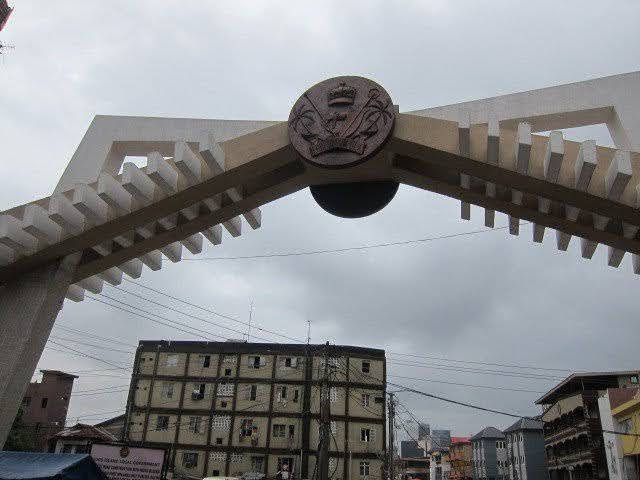
Iga Idunganran, the official residence of the Oba of Lagos, stands as a monumental testament to the rich history and cultural heritage of Lagos Island. Situated on Lagos Island, the palace has been the seat of the Oba since the 15th century, serving as both a royal residence and a symbol of the enduring traditions of the Yoruba people.
Historical Background
The origins of Iga Idunganran trace back to the 15th century when the land was first inhabited by Chief Aromire, an Ile-Ife nobleman. Chief Aromire utilized the area as a fishing port and pepper farm, reflecting the agrarian lifestyle prevalent among the indigenous people. The name "Iga Idunganran" translates to "palace built on a pepper farm," encapsulating the site's humble beginnings and its evolution into a royal seat. (omoisaleekoonline.org)
The transformation of the site into a royal residence began in 1670 during the reign of Oba Gabaro, the third Oba of Lagos. The Portuguese, who had established significant influence in the region, constructed the initial structure using materials imported from Portugal. This architectural endeavor marked the beginning of a fusion between traditional Yoruba designs and European colonial influences, setting the stage for the palace's unique architectural identity. (omoisaleekoonline.org)
Architectural Evolution
Over the centuries, Iga Idunganran has undergone several renovations and expansions, each adding layers to its architectural complexity. In 1960, the palace underwent significant renovations, commissioned by Nigeria's Prime Minister at the time, Sir Abubakar Tafawa Balewa. This modernization aimed to preserve the palace's historical significance while adapting it to contemporary needs. Subsequent Obas, including Oba Adeniji Adele II, Oba Adeyinka Oyekan II, and Oba Rilwan Akiolu, have continued these efforts, ensuring the palace remains a vibrant symbol of Lagos's cultural heritage. (omoisaleekoonline.org)
The architectural design of Iga Idunganran is a harmonious blend of traditional Yoruba elements and Portuguese colonial styles. The palace features whitewashed walls, arched windows, and ornate plasterwork, reflecting the European influence introduced by the Portuguese. Traditional Yoruba architectural features, such as inner courtyards and communal spaces, are seamlessly integrated into the design, maintaining the cultural authenticity of the structure. This fusion of styles symbolizes Lagos's ability to absorb and adapt foreign influences while preserving its indigenous identity. (discoverlagos.ng)
Cultural and Political Significance
The Oba of Lagos holds a unique position in modern Nigeria. While the Oba's role is largely ceremonial, the palace remains a focal point for cultural and political activities. The Oba serves as a custodian of Lagos's heritage, a spiritual leader for the indigenous Awori and Edo people, and a traditional authority whose blessings are sought by politicians, entrepreneurs, and citizens alike. The palace is the venue for numerous annual festivals and rituals, most notably the Eyo Festival, a masquerade unique to Lagos that traces its roots directly to the royal house and uses the Iga as its primary staging ground. (discoverlagos.ng)
The palace grounds also feature three cannons from the Royal Navy ship Prometheus, which was docked off the Lagos coastline in 1861 during the British bombardment of Lagos. This event, known as the Bombardment of Lagos, led to the signing of the Treaty of Cession, marking a significant turning point in Lagos's history. The presence of these cannons serves as a poignant reminder of the city's colonial past and its resilience in the face of external challenges. (omoisaleekoonline.org)
Visitor Information
Today, Iga Idunganran serves as a cultural and historical landmark, offering visitors a glimpse into the traditional governance and architectural styles of the Yoruba people. While the Oba's role is largely ceremonial, the palace remains a symbol of the enduring traditions and history of Lagos Island. Visitors can explore the palace grounds, view the cannons from the Royal Navy ship Prometheus, and participate in cultural events and festivals that are held throughout
Location