About this place
Discover Qasr-e-Farid
Qasr-e-Farid
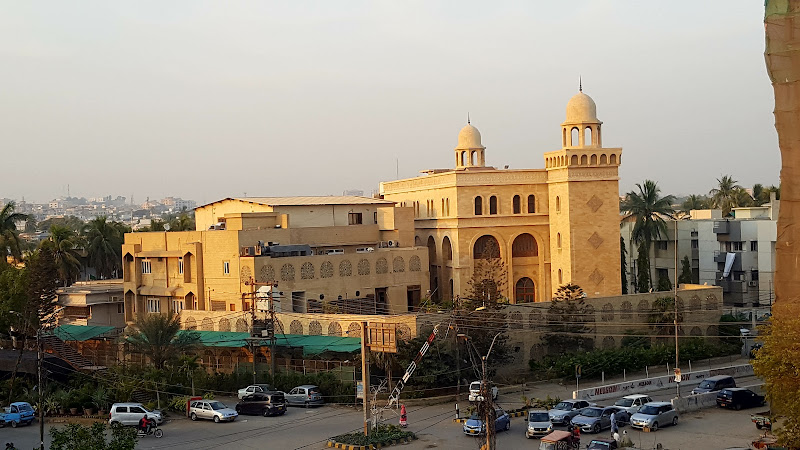
Qasr-e-Farid stands as a monumental testament to the rich spiritual and cultural heritage of southern Punjab, Pakistan. Located in Kot Mithan, a town in the Rajanpur District, this site is intrinsically linked to the life and legacy of Hazrat Khawaja Ghulam Farid, a distinguished Sufi poet and saint of the Chishti–Nizami Sufi Order. His profound contributions to Sufi literature and mysticism have left an indelible mark on the region's spiritual landscape.
Historical Background
The origins of Kot Mithan trace back to its strategic position along the Indus River, which has historically been a conduit for trade, culture, and spiritual exchange. The town's name, "Kot Mithan," is believed to be derived from the Saraiki language, where "Kot" means "fort" or "town," and "Mithan" likely refers to a prominent figure or locality. This nomenclature reflects the town's significance as a fortified settlement and its association with notable personalities. (mithankot.com)
The region's history is deeply intertwined with the Indus Valley Civilization, one of the world's oldest urban cultures. The proximity to the Indus River has influenced the area's agricultural practices, settlement patterns, and cultural developments. Over the centuries, Kot Mithan has witnessed the rise and fall of various civilizations, each leaving its imprint on the town's cultural and architectural landscape.
Geographical Significance
Situated on the west bank of the Indus River, Kot Mithan lies near the confluence of the Indus and Panjnad rivers. The Panjnad River itself is formed by the merging of the five rivers of Punjab—Jhelum, Chenab, Ravi, Beas, and Sutlej—making this confluence a significant geographical feature. This strategic location has historically made Kot Mithan a hub for trade, cultural exchange, and spiritual gatherings. (en-academic.com)
The climate of Kot Mithan is arid and desert-like, with an average annual rainfall of only 7 inches (175 mm). This climatic condition has shaped the local lifestyle and agricultural practices. The inhabitants have adapted to the harsh environment by developing irrigation techniques to cultivate crops such as wheat, sugarcane, cotton, and rice. The Indus River plays a pivotal role in this agricultural system, providing the necessary water resources for cultivation. (en.wikipedia.org)
Cultural and Spiritual Significance
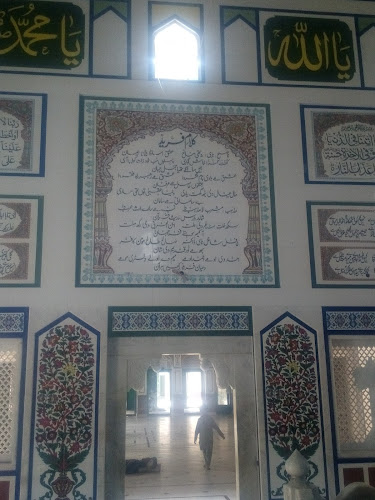
At the heart of Kot Mithan's cultural and spiritual life is the shrine of Hazrat Khawaja Ghulam Farid. Born in 1845, Khawaja Ghulam Farid was a prominent Sufi poet and saint whose works have resonated with generations. His poetry, composed in Saraiki, Punjabi, Persian, and Urdu, delves into themes of mysticism, divine love, and the unity of humanity. His compositions are characterized by their deep spiritual insight and lyrical beauty, reflecting the essence of Sufi thought and practice.
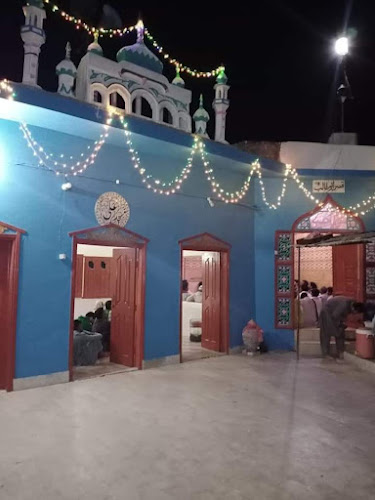
The shrine serves as a major spiritual and cultural center, attracting thousands of devotees annually, especially during the annual Urs festival. This event commemorates the saint's death anniversary and is marked by recitations of his poetry, spiritual gatherings, and cultural performances. The Urs festival not only honors Khawaja Ghulam Farid's memory but also stands as a testament to the enduring Sufi heritage of the region. (mithankot.com)
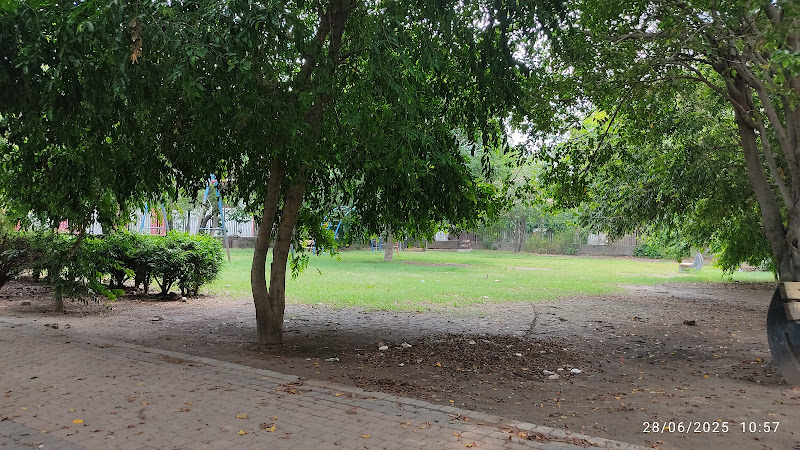
Visitors to Qasr-e-Farid can explore the serene surroundings
Location