About this place
Discover Bemposta Palace
Bemposta Palace
Situated in Lisbon's Pena district, Bemposta Palace (Palácio da Bemposta) stands as a testament to Portugal's rich history and architectural evolution. Constructed in 1694, this neoclassical palace has undergone numerous transformations, each reflecting the changing tides of Portuguese royalty and society.
Historical Background
The origins of Bemposta Palace trace back to 1693 when Queen Catherine of Braganza, daughter of King John IV of Portugal, returned to Lisbon after the death of her husband, King Charles II of England. Without a residence in the city, she initially stayed with various noble families. Recognizing the need for a permanent abode, she acquired the Bemposta estate from Francisca Pereira Teles, a noblewoman, and commissioned the construction of a palace on this site. The project began in 1694, with the renowned architect João Antunes (1642–1712) overseeing its design. By 1702, Queen Catherine had begun residing in the palace, which was designed to incorporate a chapel dedicated to Nossa Senhora da Conceição (Our Lady of the Conception). (en.wikipedia.org)
Queen Catherine's tenure at Bemposta Palace was brief; she passed away there on December 31, 1705. In her will, she bequeathed the palace to her brother, King Peter II of Portugal. In 1707, King John V integrated the palace into the House of the Infantado, making it the residence for the younger sons of the Portuguese monarchy. Notably, Infante João da Bemposta, son of King John V, resided here, lending his name to the palace. (en.wikipedia.org)
Architectural Features
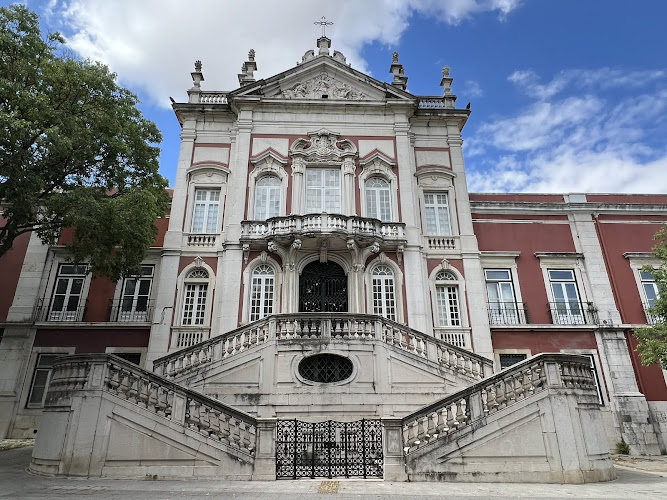
The palace's architecture is a prime example of neoclassical design, characterized by its symmetry and classical elements. The front façade features two staircases leading to the main floor and a veranda with balusters. The main arched doorway is flanked by two sets of tall windows, while a secondary floor veranda with a central window is also flanked by two other sets. The central window, much taller than the others, is surmounted by a sculpted coat-of-arms of the royal family. This façade is completed by a triangular wall adorned with a relief of two seraphs adoring the Virgin Mary, created by sculptor Joaquim de Barros Laborão, surmounted by a cross above a plinth. (en.wikipedia.org)
The Royal Chapel
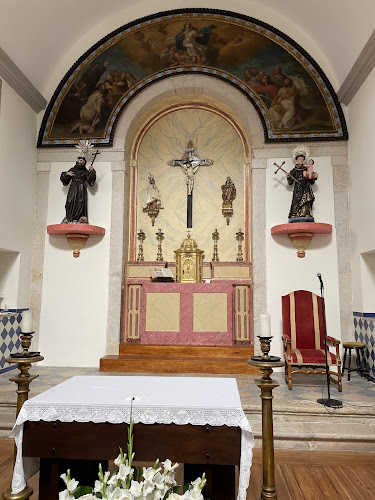
The chapel within Bemposta Palace has undergone several reconstructions, especially after the 1755 Lisbon earthquake, which necessitated extensive repairs. Under the direction of Manuel Caetano de Sousa (1742–1802), the building was remodeled, and an elaborate chapel was constructed, featuring a rectangular vestibule and nave with polychromatic mosaics. A portrait of the royal family, including Maria I and Infante John with the court, was commissioned for the main altar, depicting an iconographic representation of Lisbon as seen from the Castle of São Jorge. The success of the chapel's design was attributed to the contributions of woodworkers from the Church of São Roque, particularly the Chapel of São João Baptista. Aesthetically, the chapel drew inspiration from the Royal Chapel in the Palace of Queluz. (en.wikipedia.org)
Transition to Military Academy
By 1798, the palace had begun to fall into disrepair as the royal family moved to other residences. In 1803, Prince-Regent John VI, who would later become King John VI, resided at Bemposta. Even after the return of the royal family in 1821, John VI returned to Bemposta and initiated various renovations between 1822 and 1825, primarily in the rooms behind the chapel and on the floor near the gardens. During this period, significant political events unfolded within the palace, including the insurrections known as the Vilafrancada and Abrilada, culminating in the death of King John VI in his personal quarters on March 10, 1826. (en.wikipedia.org)
In 1833, the designation of Casa do Infantado was removed, and the palace was incorporated into the Crown's property. By 1834, a formal political administration occupied the palace, but it was vacated and returned to Crown estates under Queen Maria II. However, in 1837, Queen Maria II transferred the palace to the Army, and after extensive remodeling between 1850 and 1851, it began functioning as the Portuguese Military Academy. Under the leadership of General Bernardo de Sá Nogueira de Figueiredo, 1st Marquess of Sá da Bandeira, the building was expanded, and its interior was remodeled. In 1853, the chapel, which had previously been a private hermitage, was opened to the religious community. (en.wikipedia.org)
Modern Era and Preservation
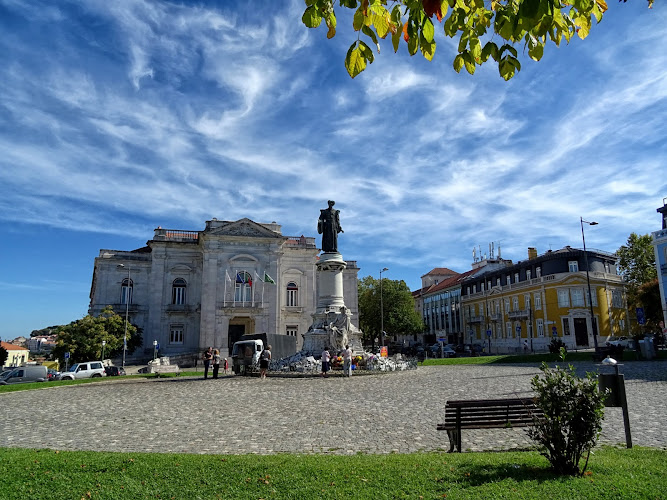
The palace has undergone several restorations to preserve its historical and architectural integrity. In 1944, a complete restoration of the chapel was undertaken, followed by a renovation of the electrical and fire prevention systems in 1997 to meet safety standards. In 1999, the General-Directorate for Buildings and National Monuments began an analysis of the palace's architectural state. Today, the palace houses the Portuguese Military Academy, and the coat-of-arms of Queen Catherine are still visible above the principal doors of the building. In 2001, a monument to Queen Catherine was installed in front of the building's façade. (en.wikipedia.org)
Visitor Information
While the palace primarily functions as a military institution, the chapel has been open to the public since 1853. Visitors can explore the chapel's rich history and admire its architectural features. The palace's façade and surrounding areas are also accessible, offering insights into its neoclassical design and historical significance. For those interested in Portuguese history and architecture, Bemposta Palace provides a fascinating glimpse into the nation's royal past and its architectural evolution.
Location