Quaker church
Alston Quaker Meeting House
About this place
Discover Alston Quaker Meeting House
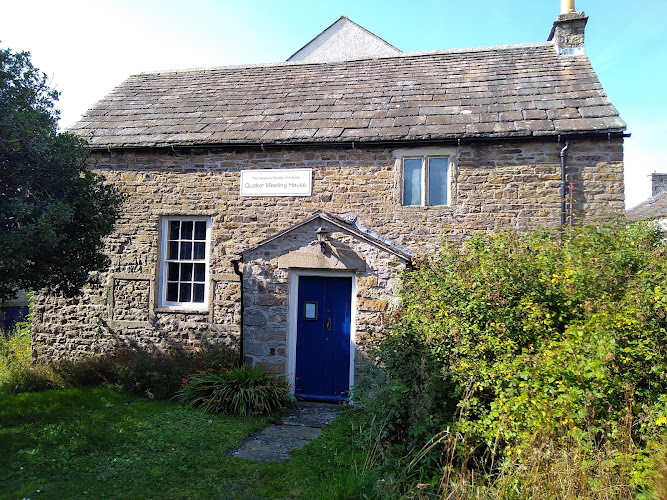
The Quaker Meeting House in Alston, situated on Front Street in the heart of this high North Pennine town, stands as a testament to the enduring presence and influence of the Religious Society of Friends, commonly known as Quakers, in the region. Established in 1732, this historic building has witnessed over two and a half centuries of worship, community gatherings, and social change, making it a significant landmark in Alston's rich tapestry.
Early History and Construction
The origins of the Alston Quaker Meeting House trace back to 1732, when the local Quaker community, seeking a dedicated space for their meetings, constructed a modest single-story building. This initial structure comprised two rooms divided by a timber screen, with stone mullioned windows—a design characteristic of early Quaker meeting houses that emphasized simplicity and functionality over ornate decoration. The choice of materials and architectural style reflected the Quakers' commitment to plainness and their aversion to ostentation in religious settings.
Expansion and Modifications
By 1762, the congregation had grown, necessitating an expansion of the meeting house. The walls were raised, and a gallery was added to accommodate the increasing number of worshippers. This enlargement also led to the replacement of the original small mullioned windows with larger sash windows, except for the one that illuminated the loft, which retained its original design. These modifications not only enhanced the building's capacity but also improved its functionality, ensuring it could serve the community's needs more effectively.
In the mid-19th century, around 1850, a group of Wesleyan Methodists, seeking a harmonious religious environment, joined the Quakers in Alston. This influx led to further adaptations of the meeting house. In 1859, the loft was removed to create a higher ceiling for the women's meeting room, and the entire building was paneled. A new minister's stand was also constructed during this period, reflecting the evolving needs and practices of the congregation. Additionally, a porch was added, bearing the date 1732 on its lintel, possibly reusing the original entrance door lintel, thereby preserving a link to the building's original construction.
Period of Disuse and Reopening
The Quaker Meeting House ceased regular meetings in 1902, leading to a period of inactivity. During this time, the building served various purposes within the Alston community, adapting to the changing social and economic landscape. However, in 1981, recognizing the building's historical and cultural significance, the congregation reopened the meeting house. This revival marked a renewed commitment to the Quaker faith and its practices in Alston.
Refurbishment and Modern Use
In 1996, the meeting house underwent a comprehensive refurbishment to modernize its facilities while preserving its historical integrity. The renovation included the addition of new toilets and a kitchen in the former women's room, enhancing the building's functionality and accessibility. Today, the meeting house continues to serve as a vibrant center for worship and community activities. Regular meetings for worship are held on the fourth Sunday of every month at 10:30 am and on the second Wednesday of each month at 6:30 pm, welcoming all visitors to join in the quiet reflection that lies at the heart of Quaker practice. (cumberlandquakers.org.uk)
Architectural Significance
The Quaker Meeting House in Alston exemplifies the architectural principles of early Quaker meeting houses, characterized by simplicity and functionality. The building's design reflects the Quakers' aversion to ostentation, with its plain exterior and unadorned interior spaces. The use of local materials and traditional construction techniques further anchors the building within its North Pennine context, making it a valuable example of vernacular architecture.
Cultural and Social Impact
Beyond its architectural features, the meeting house holds significant cultural and social value for the Alston community. It has been a focal point for Quaker worship and community gatherings for over two centuries, fostering a sense of continuity and belonging among its members. The building's adaptability over time, accommodating various groups and activities, underscores its role as a communal space that transcends religious boundaries. Its continued use and preservation reflect the community's respect for its heritage and commitment to maintaining a space for reflection, worship, and social interaction.
Visitor Information
Visitors to Alston can explore the Quaker Meeting House to gain insight into the town's rich history and the enduring presence of Quakerism in the region. The building's location on Front Street places it within easy reach of other historical sites and amenities in Alston. While the meeting house primarily serves as a place of worship, it also hosts various community groups, including a male choir, a Methodist group, and a meditation group, reflecting its ongoing role as a community hub. For those interested in visiting, it's advisable to check the latest schedules for meetings and events, as these may vary. The meeting house's commitment to accessibility ensures that all visitors, regardless of mobility, can experience its historical and spiritual significance.
In conclusion, the Quaker Meeting House in Alston is more than just a building; it is a living monument to the town's history, the resilience of its community, and the enduring principles of the Quaker faith. Its journey from
Location