Historical landmark
Cook Street Gate
About this place
Discover Cook Street Gate
Cook Street Gate
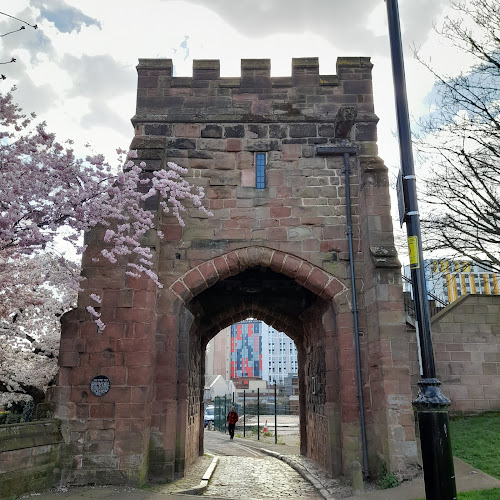
Cook Street Gate is a remarkable medieval gatehouse located in Coventry, England. Constructed around 1385, it was an integral part of the city's defensive walls, which were built to protect Coventry during a period of significant growth and prosperity. The gatehouse is one of only two surviving gates from the original twelve that once punctuated the city's fortifications, the other being Swanswell Gate. (historiccoventrytrust.org.uk)
Historical Context
In the mid-14th century, Coventry was experiencing rapid expansion, largely due to its thriving textile industry. The city was renowned for producing "Coventry blue" cloth, a high-quality fabric dyed with woad, which was highly sought after across Europe. This economic boom necessitated enhanced security measures, leading to the construction of the city walls. The walls, measuring nearly 2.2 miles (3.5 kilometers) in length, were an impressive feat of engineering, standing 12 feet (3.6 meters) high and 9 feet (2.7 meters) thick, with 32 towers and 12 gatehouses, including Cook Street Gate. (en.wikipedia.org)
Architectural Features
Cook Street Gate is constructed from rough sandstone blocks, characteristic of medieval architecture. The gatehouse features narrow arrow-slits, which were designed for defensive purposes, allowing archers to shoot at attackers while remaining protected. The crenellated battlements, added during restoration in the early 20th century, provide a distinctive silhouette against the skyline. Inside the gatehouse, visitors can find a wooden carving of the Coventry emblem, a subtle reminder of the city's identity and heritage. (coventryhub.co.uk)
Restoration and Preservation
By the late 19th century, Cook Street Gate had fallen into disrepair. In 1913, the gate was presented to the city by Colonel Sir William F. Wyley, a local philanthropist. A comprehensive restoration was undertaken in 1918, which included the addition of the crenellated battlements. In the 21st century, the gatehouse underwent further restoration by the Historic Coventry Trust, transforming it into a unique visitor accommodation. This project was part of a broader initiative to preserve Coventry's historical landmarks and provide visitors with an immersive experience of the city's rich heritage. (historiccoventrytrust.org.uk)
Cultural Significance
Cook Street Gate stands as a testament to Coventry's medieval past, offering a direct link to the city's history. It reflects the city's strategic importance during the medieval period and its commitment to preserving its heritage. The gatehouse's survival, despite the demolition of much of the city walls in the 17th century, underscores its significance to the people of Coventry. Today, it serves as a focal point for those interested in the city's history and as a symbol of its resilience and pride. (historiccoventrytrust.org.uk)
Visiting Information
Cook Street Gate is located at the top of Lady Herbert's Garden in Coventry city centre. The gatehouse is available to rent as a unique visitor accommodation, offering guests the opportunity to stay in a historic building with modern amenities. The surrounding garden provides a tranquil setting, ideal for reflection and exploration. Visitors can access the gatehouse via Cook Street, and the area is well-served by public transport, making it easily accessible for those wishing to explore Coventry's rich history. (historiccoventrytrust.org.uk)
Conclusion
Cook Street Gate is more than just a historical monument; it is a living piece of Coventry's heritage. Its preservation and adaptation into a visitor accommodation allow guests to experience a unique aspect of the city's past while enjoying the comforts of the present. Whether you're a history enthusiast, an architecture aficionado, or someone seeking a distinctive place to stay, Cook Street Gate offers a memorable and enriching experience.
Location