Historical landmark
Fords Hospital Alms House
About this place
Discover Fords Hospital Alms House
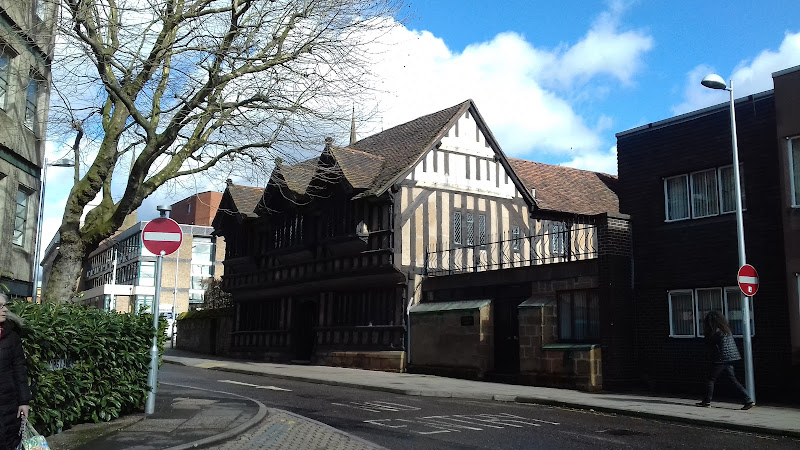
Ford's Hospital, also known as Grey Friars Hospital, stands as a testament to Coventry's rich history and architectural heritage. Located in Greyfriars Lane, this Grade I listed 16th-century half-timbered almshouse was founded in 1509 by William Ford, a prosperous wool merchant and former mayor of Coventry. The establishment was originally intended to provide accommodation for six elderly individuals: five men and one woman. This initiative was part of a broader tradition in medieval and Tudor England, where wealthy individuals established almshouses to care for the poor and elderly, reflecting the community's values of charity and social responsibility. (en.wikipedia.org)
The architectural design of Ford's Hospital is a remarkable example of Tudor domestic architecture. The building features a narrow courtyard measuring approximately 13 meters by 3.7 meters, surrounded by a timber-framed structure that projects over the ground floor, a characteristic feature of the period. The three timber-framed gables extend even further, adding to the building's distinctive appearance. The central ground-floor doorway leads to a narrow passage, culminating in a gate that opens into the picturesque courtyard. This design not only provided functional living spaces but also created a communal area that fostered a sense of community among the residents. (atlasobscura.com)
In 1517, following William Ford's death, the endowment was extended to accommodate six places for couples to live together, reflecting a progressive approach to communal living. By 1529, the almshouse was further expanded to allow five more couples to stay, indicating the growing demand for such charitable housing. Over time, the almshouse's function evolved, and by the mid-19th century, it was serving forty women, each receiving an allowance of three shillings and six pence per week. This evolution highlights the changing social dynamics and the institution's adaptability to the needs of the community. (en.wikipedia.org)
The name "Grey Friars" is derived from the building's location on Greyfriars Lane and is not associated with the Franciscan Order, as might be assumed. This naming convention was common in England, where many buildings and streets were named after local landmarks or features, rather than religious affiliations. (ourwarwickshire.org.uk)
During World War II, Coventry suffered extensive damage due to German bombing raids. On October 14, 1940, a bomb struck the north side of Ford's Hospital, resulting in the deaths of the warden, a nurse, and six residents. The attack also caused significant structural damage to the building. Despite the devastation, the community's commitment to preserving this historic structure led to its restoration between 1951 and 1953. The rebuilding process utilized original timbers and bricks, ensuring that the building retained its historical authenticity. This restoration not only preserved a vital piece of Coventry's heritage but also demonstrated the resilience and determination of the city's residents. (atlasobscura.com)
Today, Ford's Hospital continues to serve as a residence for the elderly, now comprising seven self-contained apartments. The building's picturesque courtyard and beautifully carved 16th-century timbers make it a notable landmark in Coventry. Its historical significance and architectural beauty attract visitors and historians alike, offering a glimpse into the city's rich past. The building has also appeared in popular culture, notably serving as a filming location for the BBC TV series "Doctor Who" in 2006. In the episode titled "The Shakespeare Code," the building was used to depict the Globe Theatre, showcasing its versatility and enduring appeal. (atlasobscura.com)
Visitors to Ford's Hospital can appreciate its exterior from Greyfriars Lane, where the impressive frontage and intricate timber framing are visible. While the interior remains private due to its residential function, the annual Heritage Open Day event in September offers a rare opportunity to explore the building's interior. During this event, the public can access the courtyard and view the beautifully restored timberwork up close. It's advisable to check the official website or contact the local council for the most current information regarding visiting hours and events. (atlasobscura.com)
In summary, Ford's Hospital is not merely a building but a living testament to Coventry's history, resilience, and architectural heritage. Its enduring presence continues to inspire and educate, offering insights into the social and architectural developments of 16th-century England. Whether you're a history enthusiast, architecture aficionado, or simply someone interested in Coventry's past, a visit to Ford's Hospital provides a meaningful connection to the city's rich heritage.
Location