Historical landmark
Bamford Moor Stone Circle
About this place
Discover Bamford Moor Stone Circle
Bamford Moor Stone Circle
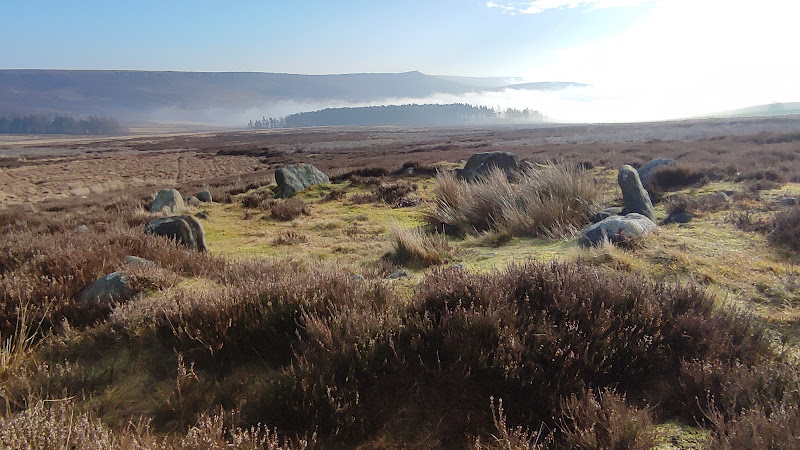
The Bamford Moor Stone Circle stands as a silent sentinel to the prehistoric past, nestled in the picturesque Hope Valley of Derbyshire, England. This ancient monument, dating back to the Bronze Age, offers a window into the lives and beliefs of the communities that once inhabited this region.
Historical Background
The Peak District, encompassing the Hope Valley, is renowned for its concentration of prehistoric monuments, including stone circles, cairns, and barrows. These structures provide invaluable insights into the social and ceremonial practices of Bronze Age societies. The Bamford Moor Stone Circle is part of this rich tapestry, reflecting the area's significance as a center for ritualistic and communal activities.
Discovery and Excavation
The exact date of the Bamford Moor Stone Circle's discovery is not well-documented. However, like many prehistoric sites, it likely remained unnoticed until modern archaeological surveys brought it to light. Excavations and studies have revealed that the site comprises several standing stones arranged in a circular formation, characteristic of Bronze Age stone circles. These findings have contributed to a broader understanding of the distribution and function of such monuments in the Peak District.
Architectural Characteristics
The Bamford Moor Stone Circle is constructed from local gritstone, a material abundant in the region. The stones vary in size and shape, with some standing upright while others have fallen or been displaced over time. The circle's diameter and the number of stones have been subjects of study, with variations noted due to natural erosion and human activity. The arrangement of the stones suggests a deliberate design, possibly aligned with celestial events such as solstices and equinoxes, indicating the builders' sophisticated understanding of astronomy.
Cultural and Ritual Significance
Stone circles like the Bamford Moor site were integral to Bronze Age communities, serving multiple functions:
- Ceremonial Gatherings: These sites likely served as venues for communal rituals, marking significant events in the agricultural calendar or life cycles.
- Territorial Markers: The prominence of stone circles may have demarcated tribal or clan boundaries, reinforcing social structures and territorial claims.
- Astronomical Observatories: Alignments of stones with celestial bodies suggest that these sites were used to observe and perhaps predict astronomical events, reflecting a deep connection between the people and the cosmos.
The Bamford Moor Stone Circle, like its counterparts, embodies the intersection of nature, culture, and the cosmos, serving as a testament to the ingenuity and spiritual life of its creators.
Comparative Monuments
The Peak District is home to several notable stone circles, each with unique characteristics:
- Nine Ladies Stone Circle: Located on Stanton Moor, this circle comprises nine upright stones and a separate flat stone known as the King Stone. The site is steeped in folklore, with tales of nine women turned to stone for dancing on the Sabbath. (english-heritage.org.uk)
- Farley Moor Stone Circle: Discovered in 2025, this site includes a ceremonial platform and a standing stone, with evidence suggesting continuous ritual use over hundreds of years. (forestryengland.uk)
- Harden Moor Stone Circle: Situated near Keighley, this Bronze Age monument offers expansive views and is accessible via numerous footpaths, making it a popular spot for walkers and history enthusiasts. (yorkshire.com)
Visitor Experience
Visiting the Bamford Moor Stone Circle provides an opportunity to connect with the past amidst the natural beauty of the Peak District. The site is accessible via well-maintained footpaths from Bamford village, with clear signage guiding visitors to the monument. The surrounding moorland offers a tranquil setting, ideal for reflection and exploration.
Conservation Efforts
Preserving the Bamford Moor Stone Circle is crucial for maintaining the archaeological integrity of the site. Ongoing conservation efforts aim to protect the monument from natural
Location