Mosque
Ahmadiyya Muslim Community UK
About this place
Discover Ahmadiyya Muslim Community UK
Fazl Mosque
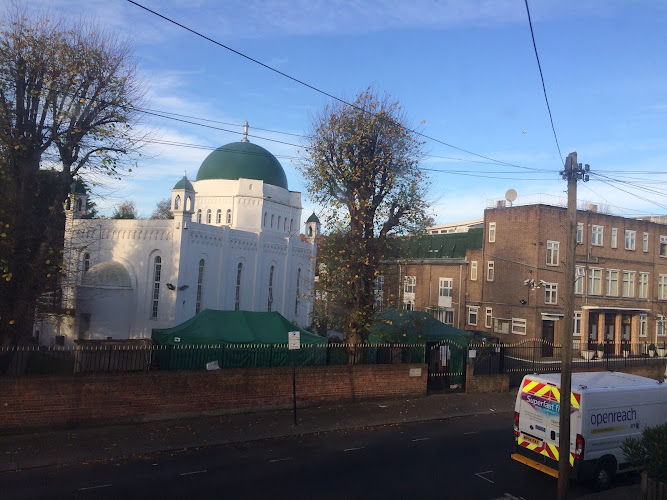
The Fazl Mosque, also known as The London Mosque, stands as a testament to the rich history and architectural evolution of London's Muslim community. Inaugurated on October 3, 1926, in the Southfields area of Wandsworth, it holds the distinction of being London's first purpose-built mosque. Its establishment marked a significant milestone in the representation of Islam in the United Kingdom, reflecting both the community's growth and its desire for a dedicated place of worship.
Historical Background
The roots of the Fazl Mosque trace back to the early 20th century when the Ahmadiyya Muslim Community, originating from Qadian in Punjab, British India, sought to establish a presence in the UK. By 1913, the community had established its first missionary in London, aiming to spread the teachings of Islam and foster interfaith dialogue. Recognizing the need for a dedicated place of worship, the community began raising funds for the construction of a mosque. In August 1920, a one-acre site in Southfields, South-West London, was purchased for this purpose. (ahmadiyya.uk)
The foundation stone of the mosque was laid in October 1924 by Hazrat Mirza Bashiruddin Mahmud Ahmad, the second Caliph of the Ahmadiyya Muslim Community. The construction commenced in September 1925 and was completed ten months later, culminating in the mosque's formal opening in October 1926. The inauguration ceremony was attended by approximately 600 distinguished guests from various countries, local MPs, and other dignitaries, underscoring the mosque's significance in the broader religious and cultural landscape of London. (ahmadiyya.uk)
Architectural Design
Designed by the esteemed British landscape architect Thomas Mawson, the Fazl Mosque is a fusion of Mughal architectural forms and contemporary British stylistic trends. The mosque's exterior features a green dome, with the apex standing 10 meters high, resting on a square base with four cupolas at each corner. The prayer hall measures 7 x 10 meters, with a height of 5.4 meters, topped by a dome that adds an additional 4.6 meters. The building's design reflects a departure from the high Victorian Orientalism prevalent in earlier mosques in Britain, presenting a restrained Islamic architectural language infused with contemporary 1920s Art Deco influences. (archnet.org)
Cultural and Religious Significance
The Fazl Mosque has played a pivotal role in the religious and cultural life of the Ahmadiyya Muslim Community in the UK. Between 1984 and 2019, it served as the international headquarters of the community, becoming the residence of the caliphs during this period. This period was marked by significant developments, including the launch of the community's satellite TV channel, Muslim Television Ahmadiyya International (MTA), in 1994. The channel enabled the caliph to transmit televised messages globally, ensuring that his sermons and messages reached the community worldwide. (en.wikipedia.org)
Notable Visitors
Over the years, the mosque has hosted several distinguished visitors, reflecting its prominence in the Muslim world. Muhammad Ali Jinnah, the founder of Pakistan, visited the mosque multiple times and delivered a significant speech on its grounds regarding his return to India to represent Muslims. In 1935, the Crown Prince of Saudi Arabia, Faisal Bin Abdul-Aziz, also visited the mosque. These visits underscore the mosque's importance as a center for interfaith dialogue and its role in fostering international relations. (en.wikipedia.org)
Architectural Significance
The architectural design of the Fazl Mosque is noteworthy for its departure from the high Victorian Orientalism prevalent in earlier mosques in Britain. It presents a restrained Islamic architectural language infused with contemporary 1920s Art Deco influences, marking a progressive shift in British Islamic architecture. The mosque's design reflects a blend of traditional Mughal architecture and British contemporary styles, creating a unique and harmonious structure. (mosqpedia.org)
Recognition and Preservation
In 2018, the Fazl Mosque was listed as a Grade II building by the Department for Digital, Culture, Media and Sport, recognizing its historic, architectural, and cultural importance. This listing ensures the mosque's preservation and acknowledges its significance as a landmark in London's architectural and cultural heritage. (ahmadiyyauk.org)
Visitor Information
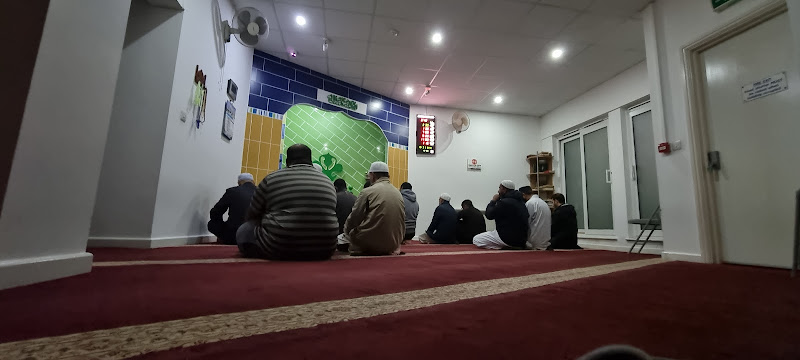
The Fazl Mosque continues to serve as a place of worship and community gathering. Visitors are welcome to explore its architectural beauty and learn about its history. The mosque is located at 16 Gressenhall Road, Southfields, London SW18 5QL. For more information or to arrange a visit, you can contact the mosque directly. (ahmadiyya.uk)
In conclusion, the Fazl Mosque stands as a significant landmark in London's history, reflecting the rich cultural and architectural heritage of the Muslim community. Its establishment and continued presence underscore the community's contributions to the city's diverse religious and cultural landscape.
Location