Protestant church
St Cedwyn's Church, Llangedwyn
About this place
Discover St Cedwyn's Church, Llangedwyn
St Cedwyn's Church, Llangedwyn
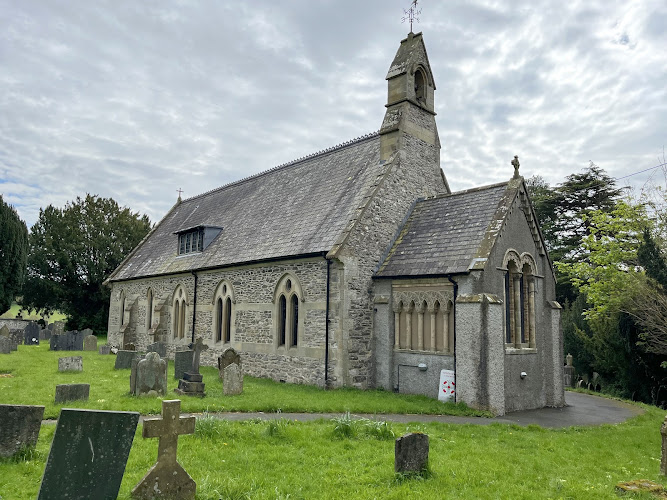
St Cedwyn's Church, situated in the serene Tanat Valley of Powys, Wales, stands as a testament to the region's rich history and architectural evolution. This Grade II listed building has undergone several restorations, each contributing to its unique character and historical significance.
Historical Background
The village of Llangedwyn, where the church is located, lies approximately seven miles southwest of Oswestry, nestled in the hills of northern Montgomeryshire within the Tanat Valley. Historically, Llangedwyn was part of the commote of Mochnant Is Rhaeadr in Denbighshire. The church of St Cedwyn has long been associated with the Williams-Wynn family, prominent landowners in the area. This connection is evident through numerous family memorials within the church and the churchyard. (heneb.org.uk)
Architectural Evolution
The church's architectural journey reflects the broader historical and cultural shifts in Wales. In medieval times, it served as a chapelry to Llanrhaeadr-ym-Mochnant, approximately seven kilometers away. The original structure underwent significant restoration in 1527, indicating its longstanding presence and importance in the community. However, the most transformative restoration occurred between 1869 and 1870 under the guidance of architect Benjamin Ferrey, commissioned by Sir Watkin Williams-Wynn. This extensive work incorporated medieval masonry in the west and east walls, preserving the church's historical essence. Notably, the west porch, constructed around 1840, is a Romanesque-revival design attributed to Thomas Penson, marking an early example of terracotta use in architecture. (en.wikipedia.org)
Architectural Features
The church's design is characterized by a chancel and nave under a single roof, with a south aisle and vestry at the east end. The west porch, a standout feature, is constructed in a Romanesque style using terracotta dressings, similar to those at St Agatha’s in Llanymynech. The structure is primarily built with grey shale slabs, interspersed with sandstone blocks, and retains traces of limewash. The roof is slate-covered, adorned with ornamental ridge tiles, and features a stone cross finial. Wooden dormers, likely added during the 1907 restoration, demarcate the divide between the chancel and nave. The bellcote, partially in ashlar, is topped with an eagle weathervane. (heritage.churchinwales.org.uk)
Interior and Furnishings
The interior of St Cedwyn's Church is rich in historical artifacts and architectural details. The west porch houses an octagonal medieval font and a wooden poor box dated 1741. A painted creed, decalogue, and Lord's Prayer are displayed on the west wall. On the north side, a wood and copper war memorial with Art Nouveau detailing by J.H.M. Bonnor adds to the church's artistic heritage. The pulpit, crafted from 17th-century oak panelling, and the octagonal Gothic font of 1875 with clustered black supporting colonnades, are notable furnishings. The church also features a collection of monuments, including those dedicated to the Williams-Wynn and Bonnor families. (en.wikipedia.org)
Churchyard and Memorials
The churchyard, originally elliptical, has been extended over time, now taking on an irregular 'butterfly' shape. It contains a 10th-century or earlier ring-headed cross slab, discovered during the 1869 restoration. The churchyard also includes two Commonwealth War Graves Commission registered war graves, one from World War I and another from World War II. (en.wikipedia.org)
Cultural Significance
St Cedwyn's Church holds a significant place in the cultural and historical landscape of the Tanat Valley.
Location