church
Santiago Apostol Church
About this place
Discover Santiago Apostol Church
The Parroquia Santiago Apóstol, situated in the heart of Baradero, Buenos Aires, Argentina, is a testament to the city's rich history and cultural evolution. Established on July 25, 1615, it stands as one of the oldest churches in the region, reflecting over four centuries of community, devotion, and transformation. (parroquiadelcarmenvcp.com.ar)
Historical Background
The origins of the Parroquia Santiago Apóstol are deeply intertwined with the early colonial history of Argentina. In 1615, during the Spanish colonization, the Franciscan order established a reduction in Baradero, aiming to evangelize the indigenous populations. This mission led to the construction of a modest adobe and thatch church, serving as a focal point for both religious and community activities. The church's initial role was pivotal in the cultural and spiritual integration of the indigenous communities into the colonial framework.
By 1640, the management of the church transitioned from the Franciscans to the secular clergy, marking a significant shift in its administration. This change facilitated a more direct connection between the church and the local population, allowing for a more personalized approach to spiritual guidance and community engagement.
In 1730, the church was designated as the head of the "curato de los Arrecifes," a jurisdictional area that included several surrounding settlements. This elevation in status underscored the church's growing influence and its central role in the region's religious and social life. The church's records from this period, including baptismal, matrimonial, and death registries, provide invaluable insights into the demographic and social dynamics of the time.
Architectural Evolution
The architectural evolution of the Parroquia Santiago Apóstol mirrors the broader historical and cultural shifts in Argentina. For the first 250 years, the church was a simple structure, typical of colonial-era buildings, with walls made of adobe and a thatched roof. This modest design was functional and suited the needs of the community at the time.
In 1861, a significant transformation occurred with the inauguration of a new building constructed with more durable materials, reflecting a shift towards permanence and stability. This structure adhered to a sober colonial style, characterized by its simplicity and functionality.
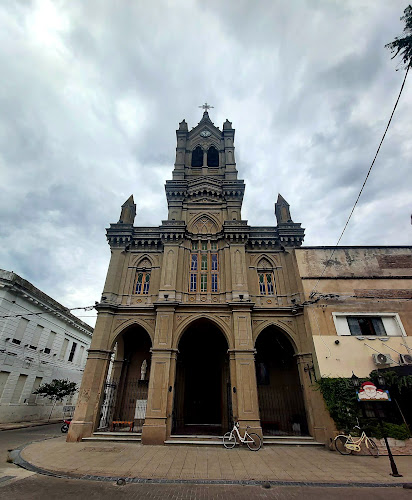
The most notable architectural transformation took place in 1905 when the current neogothic style was adopted. Built upon the foundations of the previous structure, the new design introduced pointed arches, ribbed vaults, and flying buttresses, elements that are emblematic of the Gothic revival movement. This architectural style not only enhanced the aesthetic appeal of the church but also symbolized a renewed spiritual vigor and a connection to European architectural traditions.
In 1990, the Parroquia Santiago Apóstol was officially recognized as a Provincial Historical Monument. This designation highlighted its architectural significance and the role it plays in preserving the cultural heritage of the region. The church's preservation efforts ensure that future generations can appreciate its historical and architectural value.
Cultural and Religious Significance
Beyond its architectural and historical importance, the Parroquia Santiago Apóstol holds profound cultural and religious significance for the community. It serves as a spiritual center, offering a space for worship, reflection, and community gatherings. The church's role extends beyond religious services; it is a place where cultural traditions are celebrated, and community bonds are strengthened.
The church's interior is adorned with religious artworks, including stained glass windows that depict various biblical scenes and figures. These artworks not only enhance the aesthetic experience but also serve as educational tools, conveying religious narratives and teachings to the congregation. The presence of a relic of Fray Luis Bolaños, a significant figure in the region's evangelization, adds to the church's spiritual depth and historical richness.
Visitor Information
For visitors interested in exploring the Parroquia Santiago Apóstol, it is advisable to check the current mass schedules and any special events before planning a visit. The church's official channels, including its Facebook page, provide up-to-date information on services and activities. Visitors are encouraged to approach the church with respect, especially during religious ceremonies, and to adhere to any guidelines provided by the parish.
In conclusion, the Parroquia Santiago Apóstol is more than just a historical monument; it is a living testament to the enduring faith and cultural heritage of Baradero. Its rich history, architectural beauty, and spiritual significance make it a must-visit destination for those interested in Argentina's colonial past and its vibrant present.
Location