Castillo
Santa Olalla del Cala Castle (Castillo de Santa Olalla del Cala)
About this place
Discover Santa Olalla del Cala Castle (Castillo de Santa Olalla del Cala)
Santa Olalla del Cala Castle
Nestled in the heart of Andalusia's Sierra de Aracena, Santa Olalla del Cala Castle stands as a monumental testament to the region's complex history and architectural evolution. Its strategic location and enduring presence offer a window into the past, reflecting the myriad cultural and historical influences that have shaped this part of Spain.
Historical Background
The origins of Santa Olalla del Cala trace back to prehistoric times, with evidence suggesting human presence as early as the Bronze Age. Its position along the ancient "Ruta de la Plata" (Silver Route) facilitated trade and cultural exchanges, particularly in metals extracted from nearby mines such as Almadén de la Plata and Río Tinto. This route was pivotal during Roman times, serving as a major commercial artery connecting Mérida to Astorga. (andalucia.com)
With the Muslim conquest of the Iberian Peninsula, Santa Olalla del Cala became part of Al-Andalus. The strategic importance of the area led to the construction of fortifications, including a castle that likely stood on the same site as the current structure. This fortification was part of a broader network of defensive positions aimed at controlling the region and its resources. (santaolalladelcala.es)
The Christian Reconquista in the 13th century marked a significant turning point. After the conquest of Seville by King Fernando III in 1248, the region witnessed continued conflicts, particularly with the Kingdom of Portugal. To bolster defenses against Portuguese incursions, a defensive line known as the "Banda Gallega" was established. This line comprised a series of fortifications, including the castle at Santa Olalla del Cala, designed to protect the Kingdom of Seville's borders. (santaolalladelcala.es)
Architectural Features
The current castle was commissioned by King Sancho IV of Castile in the late 13th century, around 1293, as part of the "Banda Gallega." It was constructed over an earlier Muslim fortress, which itself may have been built upon a Roman fortification. The castle's design reflects a blend of Christian and Moorish architectural styles, indicative of the period's cultural amalgamation. (culture-lovers.eu)
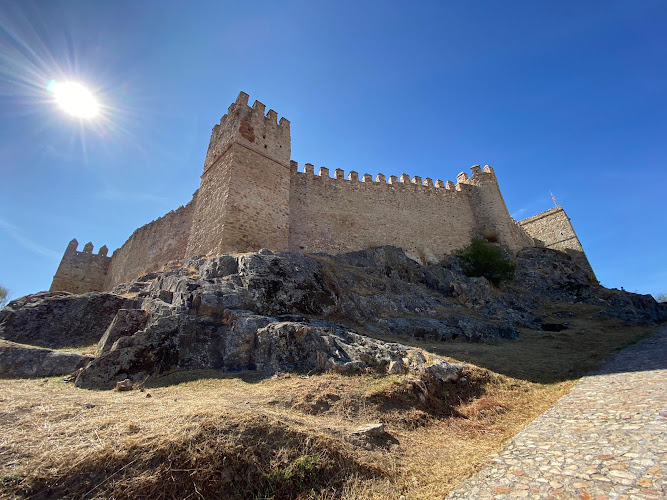
Constructed from stone masonry and brickwork, the castle features ten towers—four circular and six rectangular. These towers rise to the height of the parapet, topped with battlements featuring pyramidal and brick cube castellation. The inner precinct follows the natural contours of the ridge, showcasing the fortress's strategic design. (spottinghistory.com)
Later History and Preservation
Over the centuries, the castle's role evolved. In the 19th and early 20th centuries, it served as the municipal cemetery, with burial niches carved into its walls. This adaptation, while practical at the time, unfortunately weakened the castle's structure. Recognizing its historical and cultural significance, the castle was declared a site of cultural interest in 1949, leading to preservation efforts that have allowed it to stand as a symbol of Santa Olalla del Cala's heritage. (spottinghistory.com)
Cultural Significance
The castle's enduring presence has made it a focal point for the community and visitors alike. It stands as a testament to the region's resilience and adaptability, having witnessed numerous historical events and transitions. Its strategic location and architectural grandeur continue to inspire awe and curiosity, serving as a bridge between the past and present.
Visitor Information
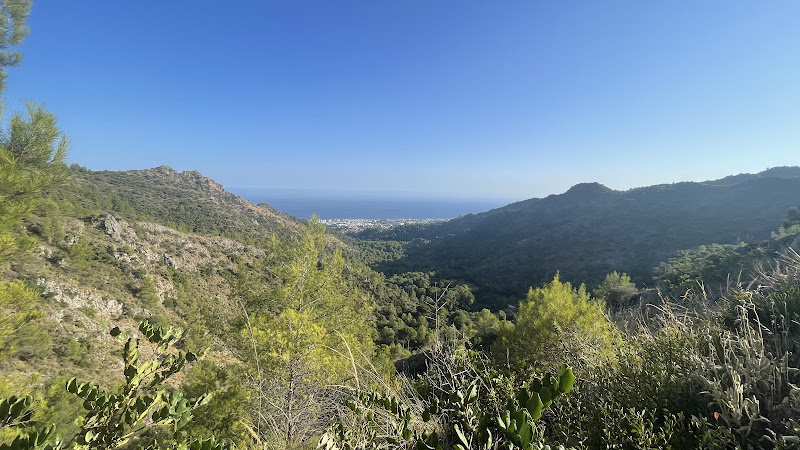
Today, the castle offers visitors a glimpse into the past, with panoramic views of the surrounding countryside and the village below. Its enduring presence continues to be a focal point for both history enthusiasts and those seeking to experience the unique charm of this Andalusian locale. Visitors can explore the castle's architectural features, learn about its history through informative displays, and enjoy the natural beauty of the Sierra de Aracena. The castle's location within the Parque Natural de la Sierra de Aracena y los Picos de Aroche also provides opportunities for hiking, bird watching, and experiencing the rich biodiversity of the area. (huelvainformacion.es)
In conclusion, Santa Olalla del Cala Castle is not merely a historical monument; it is a living testament
Location