historical site
Hamidiye Fountain (Hamidiye Çeşmesi)
About this place
Discover Hamidiye Fountain (Hamidiye Çeşmesi)
Hamidiye Fountain
The Hamidiye Fountain, also known as the Musellim Fountain, is a distinguished Ottoman-era monument located in the Mollaarap neighborhood of Bursa, Turkey. Constructed in 1901 to commemorate the 25th anniversary of Sultan Abdulhamid II's accession to the throne, this fountain stands as a testament to the architectural ingenuity and cultural significance of the late Ottoman period. (kulturportali.gov.tr)
Historical Context
The late 19th and early 20th centuries were periods of significant transformation within the Ottoman Empire. Sultan Abdulhamid II, who reigned from 1876 to 1909, initiated various modernization projects aimed at revitalizing the empire's infrastructure and cultural heritage. The construction of the Hamidiye Fountain was part of a broader effort to commemorate his 25th year on the throne, reflecting the era's emphasis on monumental architecture as a means of reinforcing imperial identity and legacy. (kulturportali.gov.tr)
Architectural Design
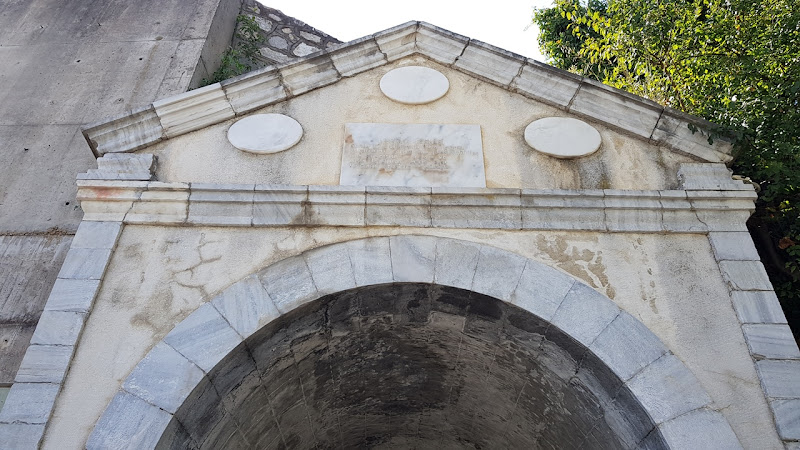
The fountain's design embodies the traditional Ottoman architectural style, characterized by its functional and aesthetic elements. It features a round-arched, three-sided open structure, commonly referred to as an eyvan-style fountain. The base is constructed using brickwork, providing structural stability, while the front facade is adorned with finely cut marble stones, showcasing the craftsmanship and attention to detail prevalent during the period. This combination of materials not only highlights the architectural sophistication of the time but also reflects the cultural significance of public water structures in Ottoman urban planning. (kulturportali.gov.tr)
Cultural Significance
Fountains in the Ottoman Empire were more than mere water dispensers; they were integral to the social and cultural fabric of the time. Serving as communal gathering spots, they facilitated social interactions and were often adorned with inscriptions and architectural elements that reflected the era's artistic and cultural values. The Hamidiye Fountain, by commemorating Sultan Abdulhamid II's reign, also serves as a symbol of the empire's architectural achievements and its commitment to public welfare. Its location near the Sultan's Mansion further underscores its historical importance, reflecting the era's urban planning and the strategic placement of monumental structures within the city. (kulturportali.gov.tr)
Restoration Efforts
Over the years, the Hamidiye Fountain has undergone several restorations aimed at preserving its historical integrity. In 2000, the Yıldırım Municipality conducted a comprehensive restoration to return the fountain to its original form. Despite these efforts, the fountain has faced challenges, including a lack of water flow in recent decades, leading to the deterioration of its original features. The absence of water flow has resulted in the loss of the fountain's functional aspect, and the surrounding environment has experienced changes that have impacted the fountain's visibility and accessibility. These challenges highlight the ongoing struggle to balance preservation with urban development and the need for sustainable conservation practices. (kulturportali.gov.tr)
Visitor Information
For visitors interested in exploring the Hamidiye Fountain, it is accessible to the public and offers a glimpse into the architectural and cultural heritage of the Ottoman era. Its location in the Mollaarap neighborhood, near the Sultan's Mansion, makes it a convenient stop for those touring the historical sites of Bursa. While the fountain may not be in full working order, its historical significance and architectural beauty make it a noteworthy landmark. Visitors are encouraged to respect the site and its surroundings, contributing to the ongoing efforts to preserve this piece of Bursa's rich history. (kulturportali.gov.tr)
Conclusion
The Hamidiye Fountain stands as a testament to the architectural ingenuity and cultural significance of the late Ottoman period. Its design reflects the traditional Ottoman architectural style, and its construction commemorates a pivotal moment in the empire's history. Despite facing challenges over the years, the fountain remains a symbol of Bursa's rich heritage and the enduring legacy of the Ottoman Empire. Efforts to preserve and restore such monuments are crucial in maintaining the historical narrative and ensuring that future generations can appreciate and learn from these cultural landmarks. (kulturportali.gov.tr)
Location