Park
Barbican
Barbican, London, UK
The City of London, often referred to as the "Square Mile," is the historic and financial heart of London, England. Established by the Romans in AD 43 as Londinium, it has evolved over nearly two millennia into a vibrant hub of commerce, culture, and history.
Historical Significance
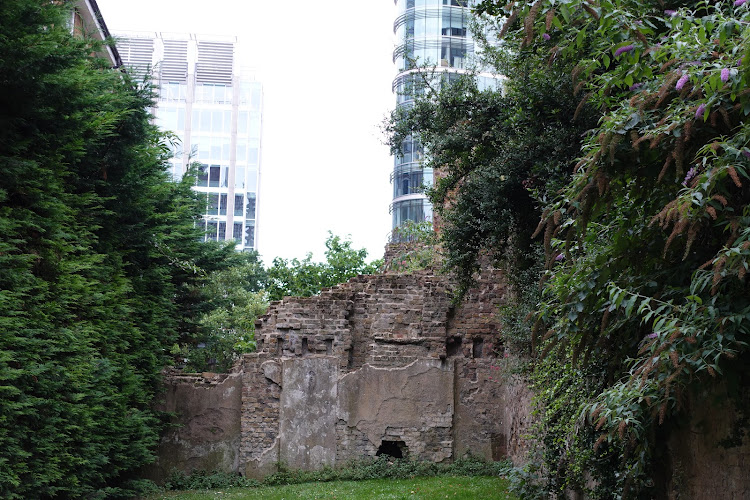
The City's rich history is evident in its ancient structures and archaeological sites. In February 2025, archaeologists uncovered the remains of a Roman basilica dating back to AD 78-84 during preparations for a new office building at 85 Gracechurch Street. This basilica was part of the original forum, serving as the political, social, and commercial center of Roman London. The well-preserved foundations highlight the Roman influence on the city's early development. (apnews.com)
Architectural Landmarks
The City boasts a blend of historic and modern architecture. St Paul's Cathedral, designed by Sir Christopher Wren and completed in 1710, is a Grade I listed building and a masterpiece of English Baroque architecture. Its iconic dome, rising 365 feet, dominates the skyline and offers panoramic views of London. (en.wikipedia.org)
Another notable structure is the Guildhall, a Grade I listed building that has served as the ceremonial and administrative center of the City since the 15th century. Its Great Hall, with its impressive medieval architecture, continues to host significant events and functions. (en.wikipedia.org)
Cultural and Financial Hub
Beyond its historical landmarks, the City is a global financial powerhouse. It houses the Bank of England, the Royal Exchange, and numerous financial institutions. The Mansion House, the official residence of the Lord Mayor of London, stands as a symbol of the City's financial and political significance. Designed by George Dance the Elder in the Palladian style, it was built primarily in the 1740s and continues to host official functions and events. (en.wikipedia.org)
Modern Developments
In recent years, the City's skyline has undergone significant changes, with the emergence of iconic structures like the Gherkin. However, some new additions, such as the "Can of Ham," "Walkie Talkie," and "Scalpel," have been critiqued for not inspiring global envy and instead contributing to a dense cluster of high-rise buildings. This has prompted discussions about the need to balance modern development with the preservation of the City's unique character. (ft.com)
Conclusion
The City of London stands as a testament to the city's resilience and adaptability. Its rich tapestry of history, culture, and commerce continues to make it a focal point for residents and visitors alike.
Recent Discoveries and Developments in the City of London:
Location
Place details
- Area
- Barbican, London
- Country
- United Kingdom
- Map
- Open in maps