About this place
Discover Lye Valley
Lye Valley, located in Headington, Oxford, is a 4.5-hectare Local Nature Reserve renowned for its unique calcareous fen habitat, a rare and ecologically significant environment in Southern England. This area has been designated as a Site of Special Scientific Interest (SSSI) due to its exceptional biodiversity and geological features. (oxford.gov.uk)
The valley's formation is the result of a spring line emerging from the permeable limestone of the Corallian Ridge overlying the impermeable Oxford Clay. Over thousands of years, this geological setup has created a calcareous fen, characterized by lime-rich, alkaline conditions that support a diverse range of plant and animal species. The presence of these springs has led to the accumulation of peat and tufa deposits, with over a meter of these materials remaining despite historical peat cutting. (wildoxfordshire.org.uk)
Botanically, Lye Valley is home to over 300 plant species, including rare and threatened varieties such as the grass-of-Parnassus and the marsh helleborine orchid. These species are adapted to the unique alkaline conditions of the fen and have been present since they colonized the area after the last ice age, approximately 8,000 to 10,000 years ago. (en.wikipedia.org)
The valley also supports a rich array of wildlife. Bird species like the reed warbler, reed bunting, water rail, and snipe have been recorded in the area. Additionally, the fen provides habitat for various reptiles, amphibians, butterflies, and bees, contributing to its status as a biodiversity hotspot. (friendsoflyevalley.org.uk)
Historically, the Lye Brook, from which the valley derives its name, was the center of a large boggy area known by various names, including 'Hogley Bog' and 'Bullingdon Bog.' This wetland environment was once used for grazing animals, which helped maintain the open landscape and allowed the unique flora to flourish. Over the past century, urban development has encroached upon the valley, leading to changes in vegetation and hydrology. The construction of large estates and the colonization of trees have altered the natural landscape, posing challenges to the preservation of the fen habitat. (friendsoflyevalley.org.uk)
Conservation efforts are ongoing to protect and restore the valley's unique environment. The Friends of Lye Valley, a local volunteer group, actively participate in habitat restoration, invasive species removal, and watercourse improvement projects. These initiatives aim to enhance the resilience of the fen and its associated species. The Wild Oxford Project, a partnership between the Berkshire, Buckinghamshire, and Oxfordshire Wildlife Trust (BBOWT) and Oxford City Council, also supports these conservation activities, focusing on improving the three rare fenlands within Oxford. (wildoxfordshire.org.uk)
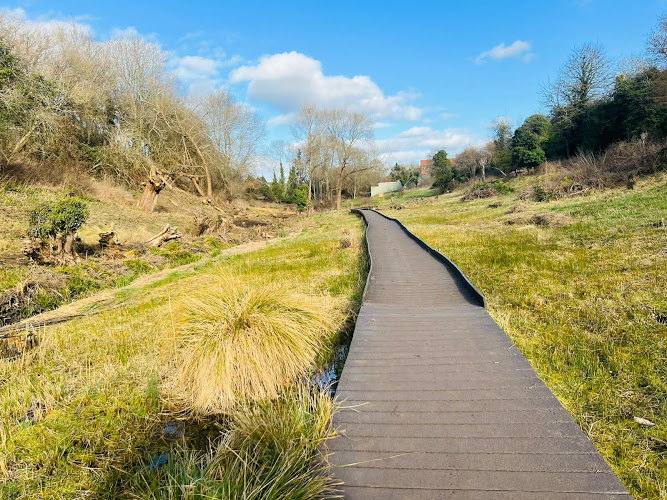
For visitors, the valley offers a tranquil retreat from urban life. A boardwalk meanders through the fen, providing accessible pathways for walking and birdwatching. The surrounding area features wet woodlands, ponds, and reedbeds, creating a diverse landscape for exploration. Access to the site is best by foot or bicycle, as there are no car parking facilities on-site. (oxford.gov.uk)
In summary, Lye Valley is a remarkable natural area that combines unique geological features with rich biodiversity. Its rare calcareous fen habitat supports a variety of plant and animal species, many of which are rare or threatened. Ongoing conservation efforts aim to preserve and enhance this valuable ecosystem, ensuring that it continues to thrive amidst the challenges posed by urban development.
Location