About this place
Discover Cenotaph
Cenotaph
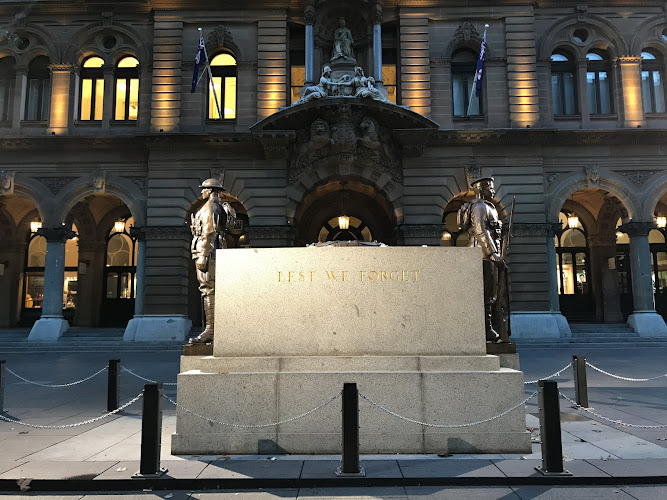
The Cenotaph in Martin Place, Sydney, is a monumental tribute to Australians who have died in military service, particularly during World War I. Its design and location reflect the nation's commitment to remembrance and honor for those who served and sacrificed.
Historical Background
The term "cenotaph" derives from the Greek words 'kenos' (empty) and 'taphos' (tomb), signifying an "empty tomb." This concept is embodied in the Sydney Cenotaph, which commemorates those whose remains were not returned to Australia. The idea for a memorial in Martin Place was first proposed in 1923 by the Returned Sailors and Soldiers Imperial League of New South Wales, recognizing the area as a significant site for wartime recruitment and patriotic rallies during World War I. (warmemorialsregister.nsw.gov.au)
Design and Construction
Commissioned in 1927, the Cenotaph was designed by Sir Bertram Mackennal, a prominent Australian sculptor. The monument consists of a rectangular granite block, constructed from 23 pieces of Moruya granite—the same material used in the Sydney Harbour Bridge pylons. At each end of the block stands a bronze statue: one of a soldier representing the Australian Imperial Force (AIF) and the other of a sailor representing the Royal Australian Navy (RAN). The soldier's model was Private William Pigot Darby, and the sailor's model was Leading Signalman John William Varcoe. The inscriptions "To Our Glorious Dead" on the southern side and "Lest We Forget" on the northern side are highlighted in gold. (cityofsydney.nsw.gov.au)
Unveiling and Significance
The Cenotaph was unveiled on 21 February 1929, with a ceremony attended by dignitaries, veterans, and the public. It quickly became a focal point for remembrance, especially during Anzac Day and Armistice Day ceremonies, drawing thousands annually. Its location in Martin Place, a historic site for wartime recruitment and rallies, adds to its significance. (cityofsydney.nsw.gov.au)
Cultural and Social Impact
Over the years, the Cenotaph has been a site for various commemorative events, including memorial services, wreath-laying ceremonies, and moments of reflection. It serves as a reminder of the sacrifices made by Australian servicemen and women and the impact of war on the nation. The monument's design and inscriptions evoke a sense of solemnity and respect, encouraging visitors to pause and reflect on the cost of freedom and peace.
Visitor Information
The Cenotaph is located in Martin Place, Sydney, and is accessible to the public year-round. It is a popular site for both locals and tourists, especially during national commemorative events. The area around the Cenotaph is pedestrian-friendly, with nearby cafes, shops, and other landmarks, making it a central point in Sydney's city center. Visitors are encouraged to approach the monument with respect, as it is a site of national significance and reflection.
The Cenotaph stands as a testament to Australia's history, honoring those who have served and sacrificed in the nation's conflicts. Its enduring presence in Martin Place continues to inspire reflection, respect, and remembrance among all who visit.
Location