Historical landmark
City Wall and Towers
About this place
Discover City Wall and Towers
The City of London, established around AD 43-50, was originally a Roman settlement known as Londinium. To protect this burgeoning city, the Romans constructed a formidable defensive wall around AD 200, marking a significant milestone in Roman Britain. This wall, approximately 2 miles (3.2 kilometers) long and about 6 meters (20 feet) high, was one of the largest construction projects of its time, requiring around 85,000 tons of Kentish ragstone. (cityoflondon.gov.uk)
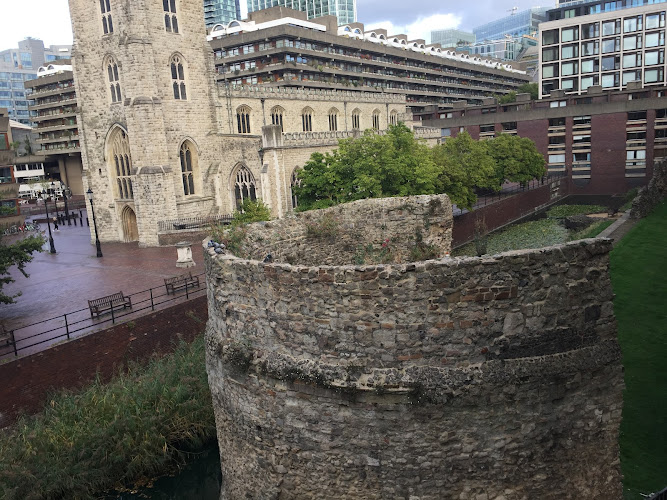
The Roman wall was not just a simple barrier; it was a complex structure featuring a core of rubble bound in hard mortar, faced on both sides with roughly squared stone blocks. Every fifth or sixth course included a horizontal band of red tiles, enhancing the wall's strength and durability. In front of the eastern face, a ditch up to 1.8 meters (5.9 feet) deep and 4.8 meters (15.7 feet) wide was added, further bolstering its defensive capabilities. (english-heritage.org.uk)
Strategically placed towers along the wall provided access to a walkway atop the structure, offering both surveillance and defense advantages. The wall originally incorporated four main city gates, with an additional entrance at the army’s fortress at Cripplegate on the north-west side. These gates were not merely functional; they often served as prisons and displayed the heads of executed criminals, serving as grim warnings to potential wrongdoers. (english-heritage.org.uk)
Over the centuries, the wall underwent several modifications. In the 4th century, D-shaped bastions were added to the eastern sections, likely in response to threats from sea-borne raiders such as the Saxons. These bastions were equipped with catapults or stone-throwing engines to protect against attacks. The wall's design and fortifications were continually adapted to meet the evolving security needs of the city. (english-heritage.org.uk)
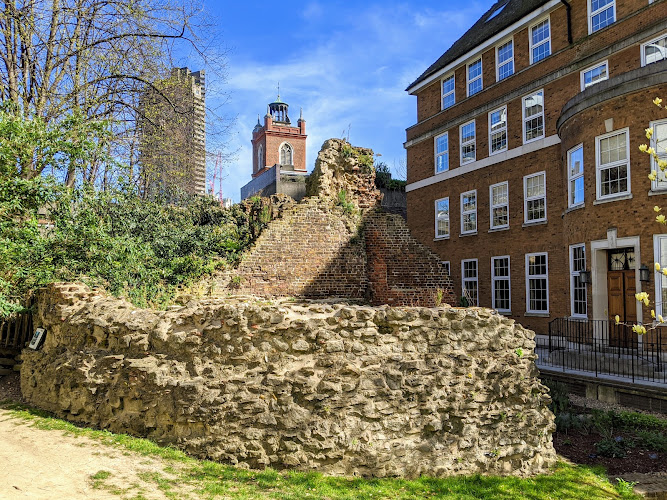
Following the end of Roman rule around AD 410, the wall fell into disrepair. However, in 886, King Alfred reoccupied the city in response to Viking raids along the Thames, and it's likely that the walls were repaired at this time. Repairs and enhancements continued throughout the medieval period, with the wall largely defining the boundaries of the City of London until the later Middle Ages. As the city expanded, the wall became less central to its defense, and large parts were demolished in the 18th and 19th centuries to improve traffic flow. Despite this, several sections of the wall have been preserved and can still be seen today, serving as a testament to London's rich history. (english-heritage.org.uk)
The remnants of the wall, along with the iconic Tower of London, which was constructed in the 11th century, continue to be significant historical landmarks. The Tower of London, originally built as a royal residence and later serving as a prison and place of execution, stands as a symbol of the city's medieval past. Its proximity to the original city wall highlights the strategic importance of these fortifications in shaping London's development. (britannica.com)
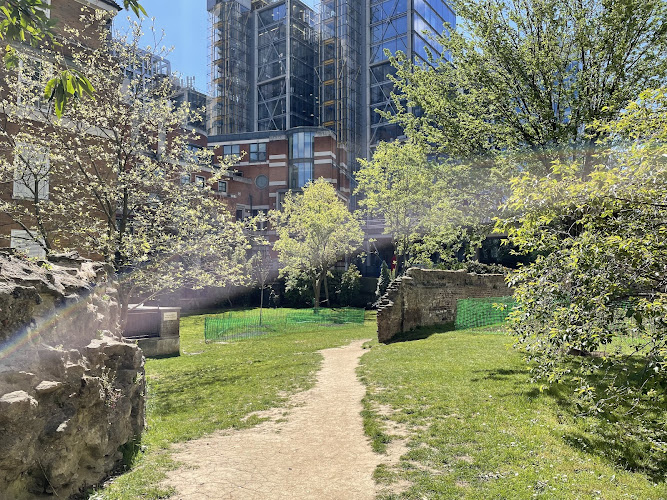
Today, the surviving sections of the wall, such as those near Tower Hill, Aldgate, and Cripplegate, offer a glimpse into the city's ancient defenses. These remnants are not only archaeological treasures but also integral parts of London's urban landscape, reflecting the city's ability to blend its rich history with modern life. The preservation of these structures allows both residents and visitors to connect with the past, providing a tangible link to the events and people that have shaped the city over millennia.
Location