Historical landmark
St Alban Wood Street Church Tower
About this place
Discover St Alban Wood Street Church Tower
St Alban Wood Street Church Tower
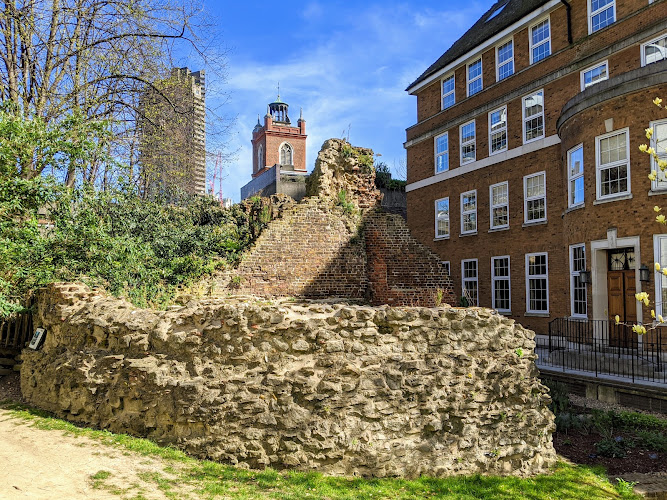
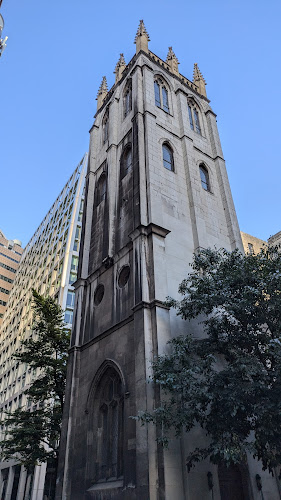
The tower of the former St Alban's Church stands as a solitary monument in the heart of London's financial district, a testament to the city's rich architectural and historical tapestry. This structure is the last remaining fragment of a church that has undergone multiple reconstructions over centuries, each reflecting the prevailing architectural styles and the resilience of the London community.
The origins of St Alban's Church trace back to the medieval period, with records indicating its existence as early as 930 AD. Some historians suggest that the church's foundation may date back even further, possibly to the 8th century during the reign of King Offa of Mercia, who is believed to have had a palace on this site that included a chapel. This early establishment underscores the site's long-standing significance in London's ecclesiastical history. (exploring-london.com)
In 1633, the church was found to be in a state of disrepair. Architect Inigo Jones, along with Sir Henry Spiller and others, assessed the building and determined it beyond repair. Consequently, the church was demolished, and a new structure was erected in 1634. This rebuilding was part of a broader effort to revitalize London's religious architecture during that period. (memoirsofametrogirl.com)
The Great Fire of London in 1666 devastated the city, including St Alban's Church. The church was among the 84 churches completely destroyed by the fire. Following the disaster, the parish was combined with that of St Olave Silver Street, which had not been rebuilt. (londonparishclerks.com)
In the aftermath of the fire, the church was rebuilt by Sir Christopher Wren between 1682 and 1685. Wren's design embraced the late Perpendicular Gothic style, characterized by its verticality and intricate detailing. The church featured a nave and aisles divided by piers shaped as clustered columns, supporting unusually flattened pointed arches. The nave had plaster lierne vaults, adding to the interior's grandeur. A 92-foot high tower, which stood on the north side of the church, was added in 1697–98, further enhancing the church's skyline. (en.wikipedia.org)
The 19th century saw further restoration under the guidance of Sir George Gilbert Scott, a prominent Victorian architect known for his work on St Pancras Station and the Albert Memorial. Between 1858 and 1859, Scott added an apse to the church, enriching its architectural complexity. (gilbertscott.org)
The church's resilience was tested during World War II. On December 29, 1940, the church was severely damaged during the Blitz, with the main building being burnt out and partially destroyed. The tower, however, remained standing amidst the devastation. In 1954, the parish was united with that of St Vedast Foster Lane, and the remains of the church were demolished in 1965. The tower was designated a Grade II* listed building on January 4, 1950, recognizing its architectural and historical significance. (historicengland.org.uk)
In the 1980s, the tower underwent a significant transformation. It was converted into a private dwelling, a unique adaptation that preserved the structure's integrity while repurposing it for modern use. Today, the tower stands alone on a traffic island, surrounded by the bustling environment of London's financial district. Its presence serves as a poignant reminder of the city's resilience and its ability to honor and repurpose its historical landmarks amidst the ever-changing urban landscape. (ekhinos.com)
The tower's distinctive Gothic architecture, with its pilaster buttresses and parapet adorned with pinnacles, continues to captivate observers. Its survival through centuries of upheaval, including fires, bombings, and urban redevelopment, underscores the enduring legacy of London's architectural heritage. As a Grade II* listed building, the tower is protected under UK law, ensuring its preservation for future generations to appreciate and study. (historicengland.org.uk)
Visitors to the area can view the tower from the surrounding streets, though access to the interior is private. Its location on a traffic island adds to its unique character, standing as a solitary monument amidst the modernity of the city. The tower not only offers a glimpse into London's architectural past but also serves as a testament to the city's resilience and its commitment to preserving its historical landmarks amidst the challenges of the modern world.
Location