Garden
St Olave Silver Street
About this place
Discover St Olave Silver Street
St Olave's Church, Silver Street, was a historic Anglican church located in the City of London, dedicated to St Olaf, the first Christian King of Norway. The earliest known reference to the church dates back to the 12th century, where it was referred to as "St Olave de Mukewellestrate," indicating its proximity to Monkwell Street. (en.wikipedia.org)
In 1609, the church underwent significant rebuilding and enlargement. It featured a small churchyard and owned additional burial land in Noble Street, known as the "anatomizer's ground." This area was associated with the Barber-Surgeons' Company, which conducted dissections for anatomical teaching purposes. The bodies used for these studies were interred in the churchyard, linking the church to the early development of medical education in London. (flickeringlamps.com)
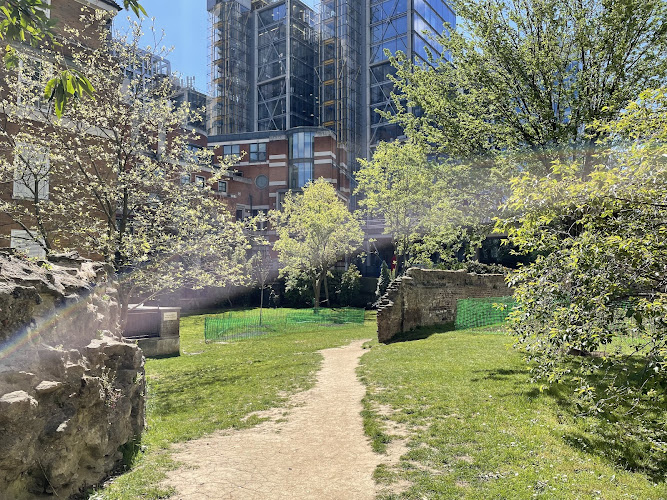
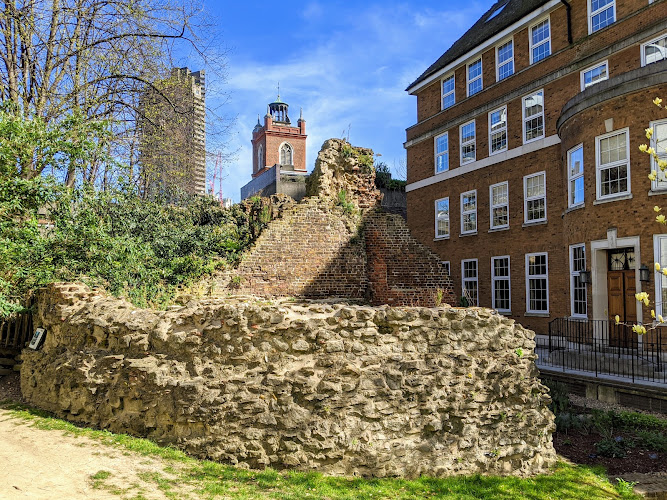
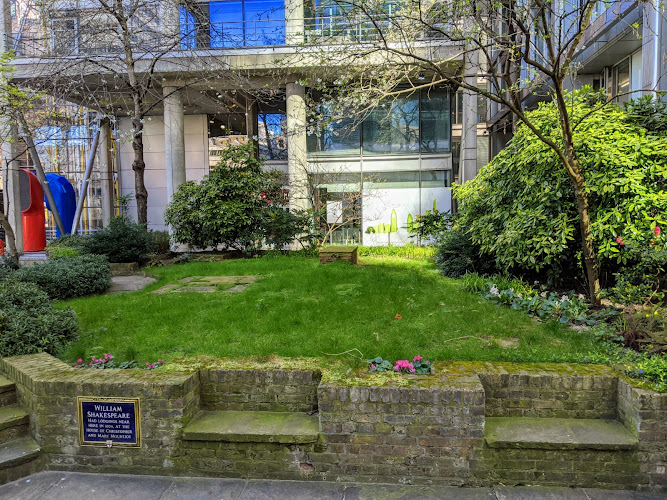
The church was destroyed in the Great Fire of London in 1666 and was not rebuilt. Instead, the parish was merged with that of St Alban, Wood Street. The site now serves as a small garden at the end of Noble Street, near the Museum of London. A late 17th-century tablet marks the spot where the church once stood, commemorating its destruction in the fire. (en.wikipedia.org)
The area surrounding the former church site has undergone significant changes over the centuries. Silver Street, once a bustling thoroughfare, was destroyed during the Blitz and erased by post-war development and traffic planning. The churchyard was reduced in size in 1865 when a plaque was installed commemorating the widening of the road. (flickeringlamps.com)
Today, the site serves as a quiet garden, offering a peaceful retreat amidst the bustling city. The surviving plaque and the surrounding area provide a glimpse into London's rich history, reflecting the city's resilience and the layers of its past that continue to shape its present.
Location