About this place
Discover Mevlana Museum
Mevlâna Museum
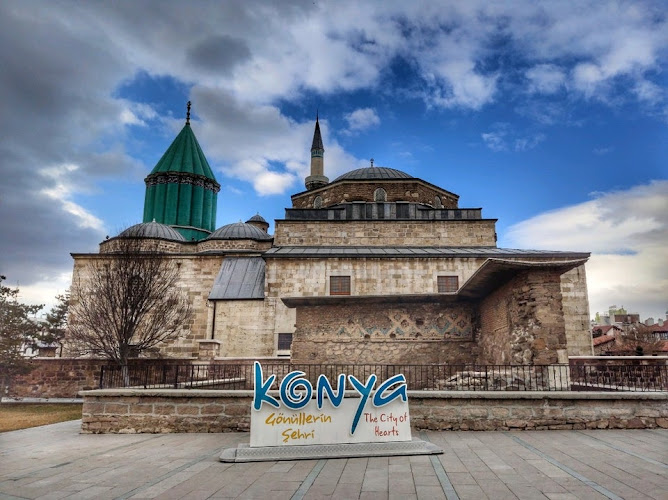
The Mevlâna Museum in Konya, Turkey, stands as a testament to the enduring legacy of Jalal ad-Din Muhammad Rumi, a 13th-century Persian poet, Islamic scholar, and Sufi mystic. Known as Mevlâna in Turkish, Rumi's teachings on love, tolerance, and spiritual enlightenment have resonated across cultures and centuries. The museum, originally established as a dervish lodge (tekke) of the Mevlevi Order, serves as a spiritual sanctuary and a repository of artifacts that illuminate the rich history and practices of Sufism.
Historical Background
Rumi was born in 1207 in the city of Balkh, in present-day Afghanistan. Fleeing the Mongol invasions, his family settled in Konya, then part of the Seljuk Sultanate of Rum. In 1228, Sultan 'Ala' al-Din Kayqubad, the Seljuk sultan, offered his rose garden as a burial place for Rumi's father, Baha' ud-Din Walad, a theologian and mystic. This gesture laid the foundation for the establishment of the Mevlevi Order, which Rumi would later lead. (sacred-destinations.com)
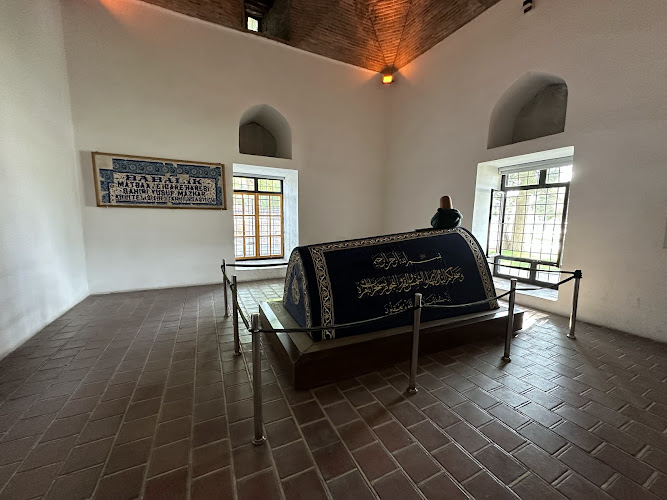
Upon Rumi's death on December 17, 1273, he was interred beside his father in the same rose garden. His successor, Hüsamettin Çelebi, commissioned the construction of a mausoleum (Kubbe-i Hadra) over Rumi's tomb. Completed in 1274, the mausoleum's distinctive green dome has become an iconic symbol of Konya. (sacred-destinations.com)
Architectural Features
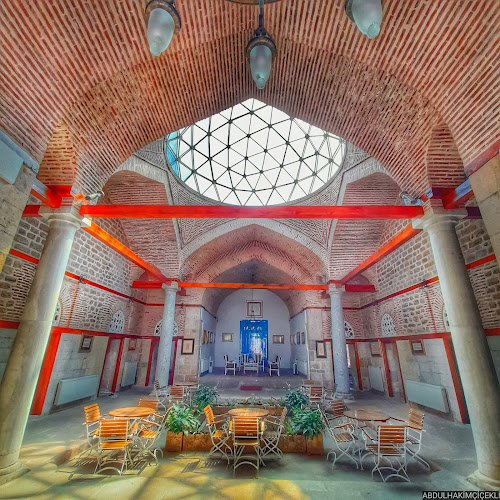
The Mevlâna Museum complex is a harmonious blend of Seljuk and Ottoman architectural styles, reflecting the cultural and spiritual significance of the site. The central mausoleum, with its green-tiled dome, is supported by four massive columns, giving it the appearance of a "green dome" (Kubbe-i Hadra). Surrounding the mausoleum are various structures, including a mosque, a semahane (ceremonial hall for the whirling dervishes), dervish cells, and kitchens. These buildings are adorned with intricate calligraphy, tile work, and wood carvings, showcasing the artistic heritage of the period. (sacred-destinations.com)
Cultural Significance
The Mevlâna Museum is not only a mausoleum but also a center of spiritual and cultural life. It was the original lodge of the Mevlevi Order, founded by Rumi's followers after his death. The Mevlevi Order is renowned for its practice of the "Sema," a form of physically active meditation that involves whirling dances. These ceremonies symbolize the spiritual journey of the soul's ascent to the divine. The museum continues to host Sema performances, allowing visitors to witness this unique aspect of Sufi tradition. (allabouturkiye.com)
Artifacts and Exhibitions
The museum houses a vast collection of artifacts related to the Mevlevi Order and Sufi mysticism. Among the most notable items are illuminated Qur'ans, prayer rugs, and musical instruments such as the ney (a type of flute) and the kudüm (a small double-headed drum). One of the most intriguing artifacts is the "Stones of Patience," used by dervishes as a test of endurance during their spiritual practices. Another significant item is the celestial globe, believed to have been used in astronomy education during Galileo's time. (sillehan.com)
Visitor Information
The Mevlâna Museum is open daily, with visiting hours typically from 8:00 AM to 5:00 PM. Admission is free, making it accessible to a wide audience. The museum is centrally located in Konya, easily reachable by public transportation, car, or on foot from most parts of the city. The best times to visit are during spring (April–June) and fall (September–October), when the weather is pleasant and the crowds are manageable. (allabouturkiye.com)
**Notable Events
Location