About this place
Discover Big Ben
Big Ben
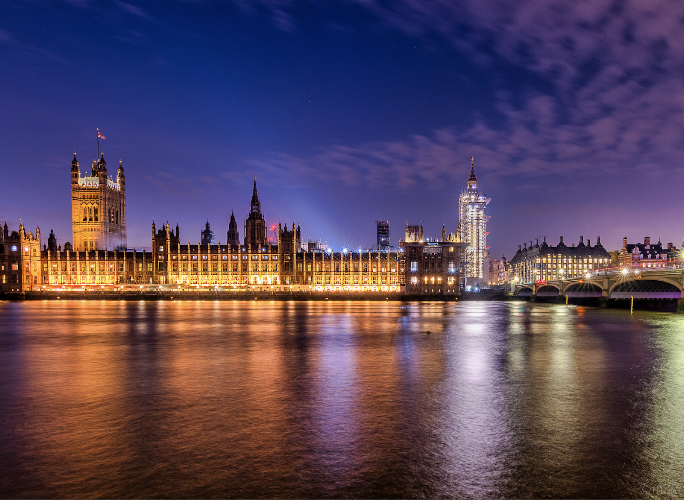
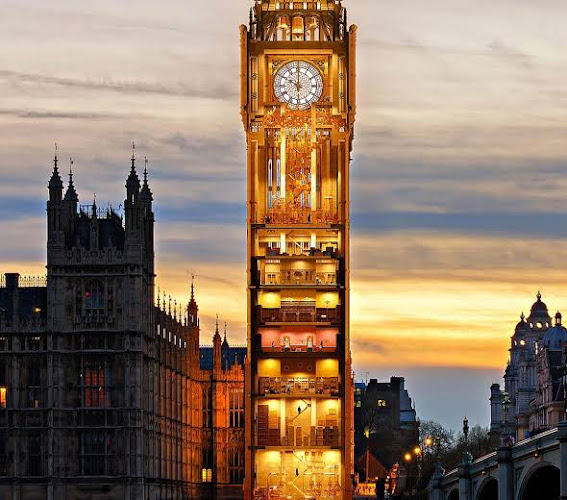
Big Ben, officially known as the Elizabeth Tower, is one of London's most iconic landmarks, symbolizing British heritage and parliamentary democracy. Situated at the northern end of the Palace of Westminster, this clock tower has been a focal point of British culture and history since its completion in 1859.
Historical Background
The origins of Big Ben trace back to the catastrophic fire of 1834, which destroyed the original Palace of Westminster. In the aftermath, a competition was held to design a new palace, leading to the appointment of architect Charles Barry. Barry's design incorporated a clock tower, which would become the centerpiece of the new palace. The tower was designed by Augustus Pugin in a neo-Gothic style, reflecting the medieval Gothic architecture that Pugin championed. (architecturelab.net)
Construction and Design
The construction of the tower began in 1843 and was completed in 1859. Standing at 96 meters (316 feet) tall, the tower was, at the time, the largest and most accurate four-faced striking and chiming clock in the world. Each clock face measures 7 meters (22.5 feet) in diameter, and the minute hands are 4.2 meters (14 feet) long, weighing about 100 kilograms (220 pounds) each. The clock mechanism was designed by Edmund Beckett Denison and Sir George Airy, the Astronomer Royal, and constructed by clockmaker Frederick Dent. Denison's innovative gravity escapement system ensured the clock's accuracy, making it one of the most reliable timepieces of its era. (britannica.com)
The Great Bell
The name "Big Ben" originally referred to the Great Bell, which weighs over 13 tons (13,760 kilograms). The bell was cast in 1858 by the Whitechapel Bell Foundry. However, shortly after installation, the bell developed a crack. To address this, a lighter hammer was fitted, and the bell was rotated to present an undamaged section to the hammer, allowing it to chime as we hear it today. (visitlondon.com)
Architectural Features
The tower's design is a masterpiece of neo-Gothic architecture, featuring intricate carvings, statues, shields, and inscriptions that reflect the history and identity of the United Kingdom. Notably, the clock tower features shields representing all four nations of the UK: a rose for England, thistle for Scotland, shamrock for Northern Ireland, and leek for Wales. (britishheritage.org)
Cultural Significance
Over the years, Big Ben has become a symbol of British heritage and parliamentary democracy. Its chimes are broadcast daily by the BBC, and the tower is a focal point for New Year's Eve celebrations in the UK. In 2012, the tower was officially renamed the Elizabeth Tower in honor of Queen Elizabeth II's Diamond Jubilee. (parliament.uk)
Renovations and Conservation
Between 2017 and 2021, Big Ben underwent extensive conservation work to restore and preserve its structure and mechanisms. During this period, the bells remained silent, with a few exceptions for special events. The restoration aimed to ensure the tower's longevity and maintain its status as a symbol of British heritage. (parliament.uk)
Visitor Information
Visitors can explore the tower through guided tours, which offer insights into its history, architecture, and the clock mechanism. The tours provide access to the belfry, where the Great Bell resides, and offer panoramic views of London from the tower's upper levels. The tours are led by knowledgeable guides who share fascinating stories and facts about the tower's construction, its role in British history, and its cultural significance. Tickets for the tours can be purchased in advance through the UK
Location